
Last updated September 10, 2026
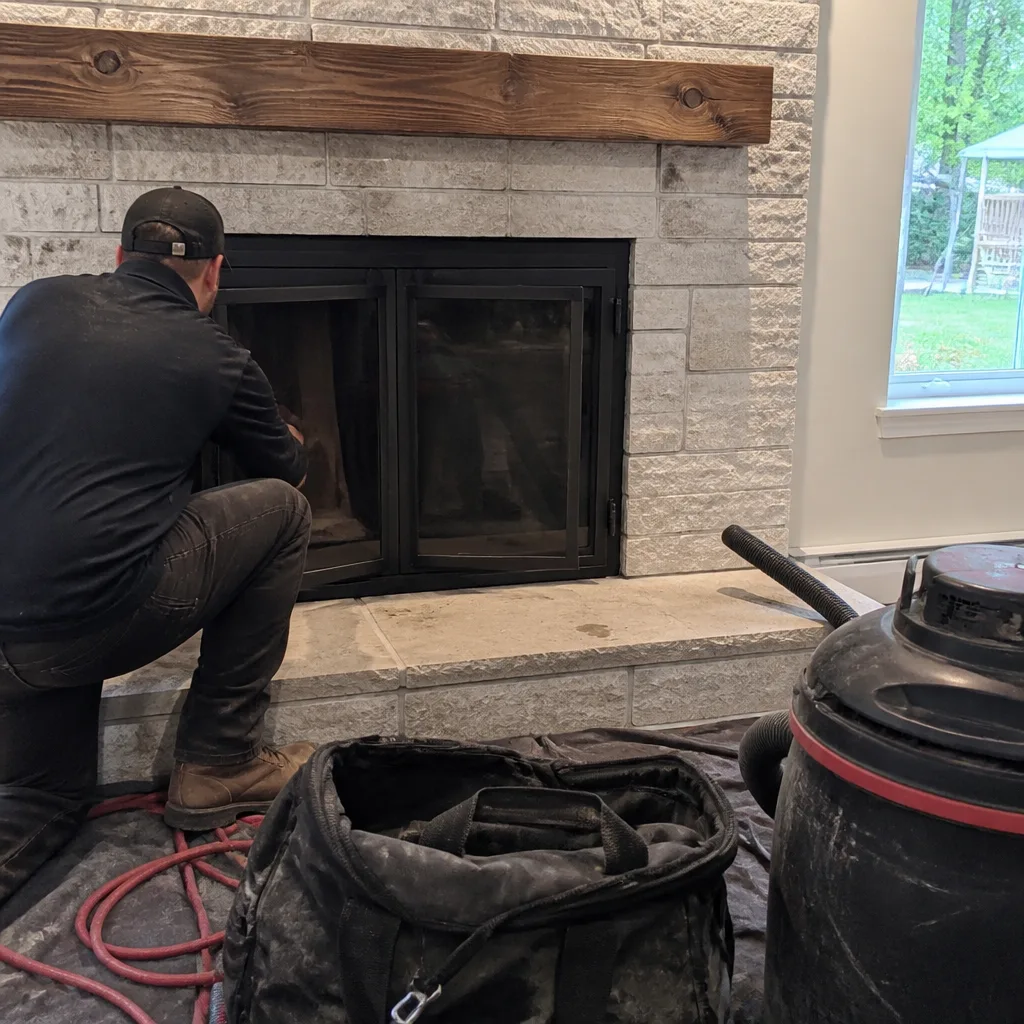
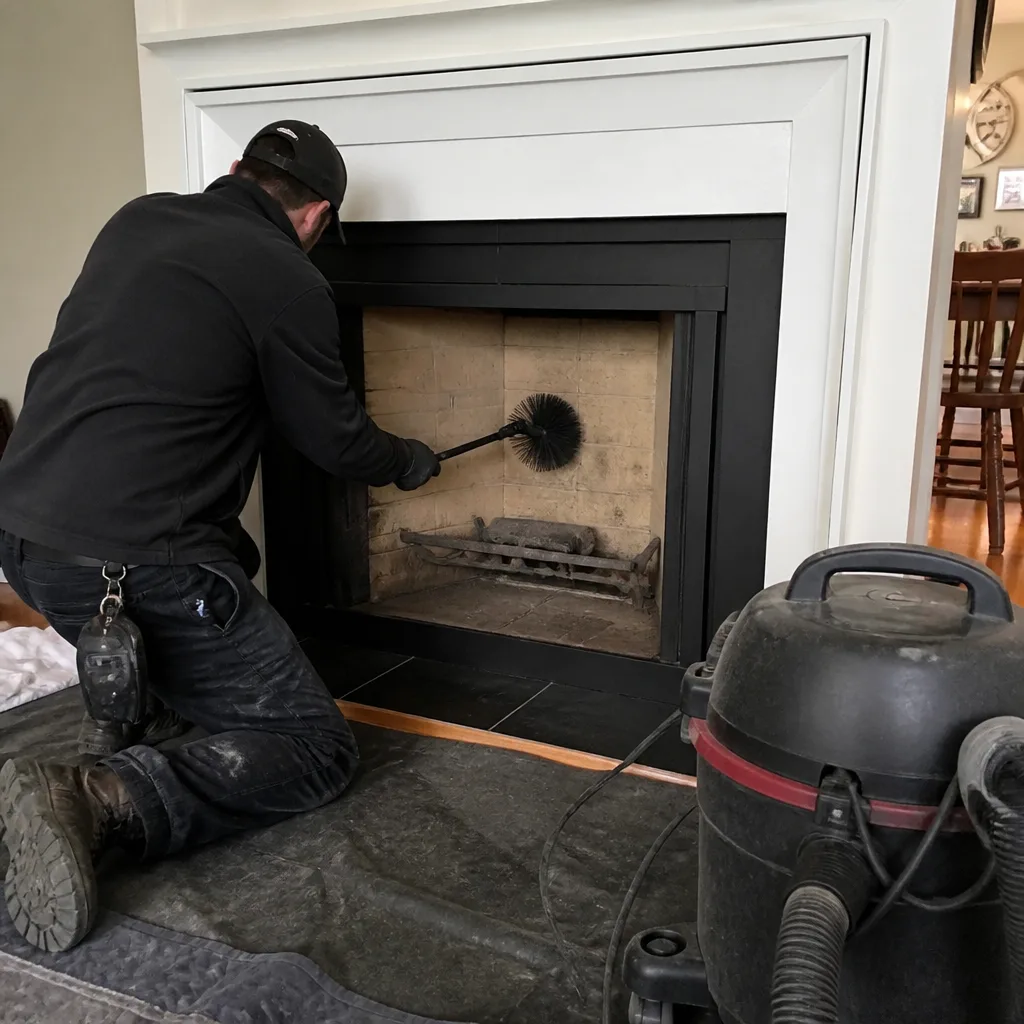
Level 1 sweep and inspection to the NFPA 211 annual standard - flue, crown, cap, and flashing checked and photographed
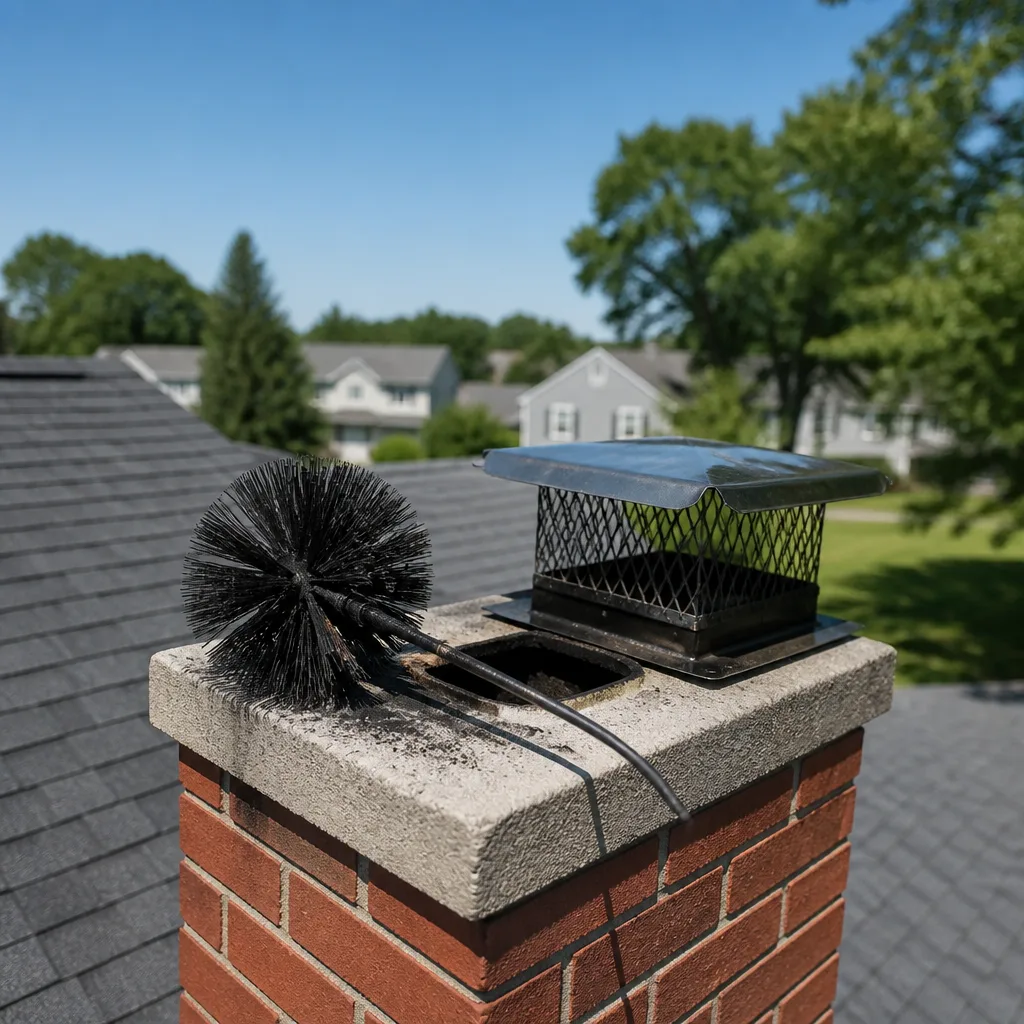
Chimney sweep logs do not sweep chimneys. They loosen some creosote - which then falls where a brush and vacuum still have to collect it.
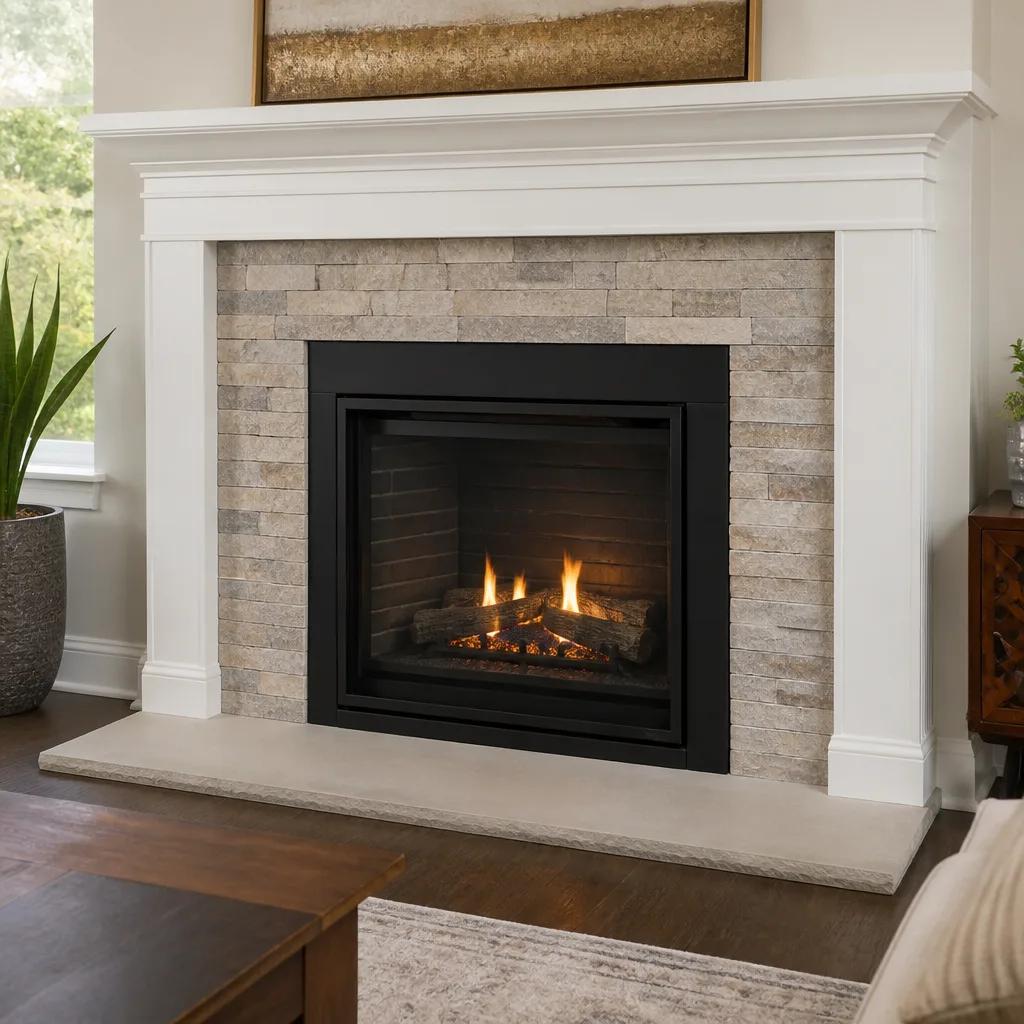
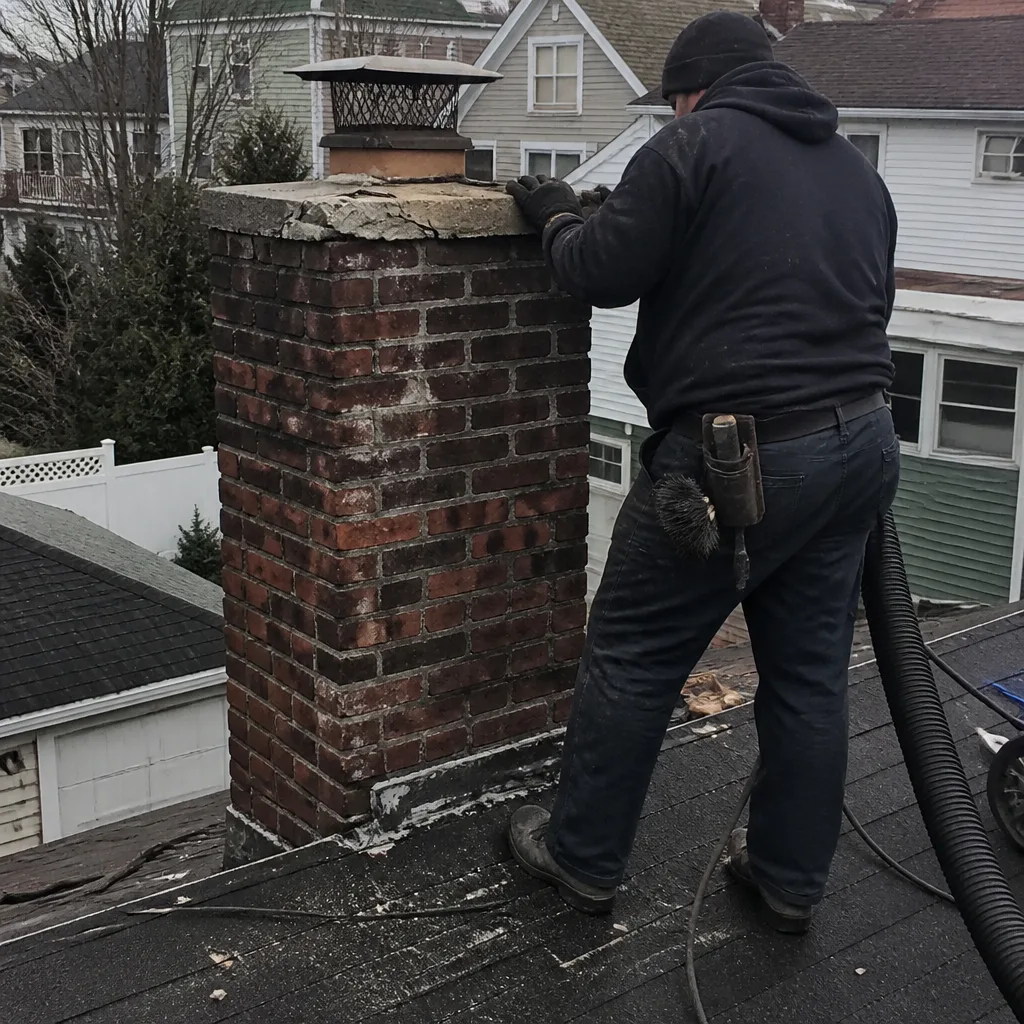 Before
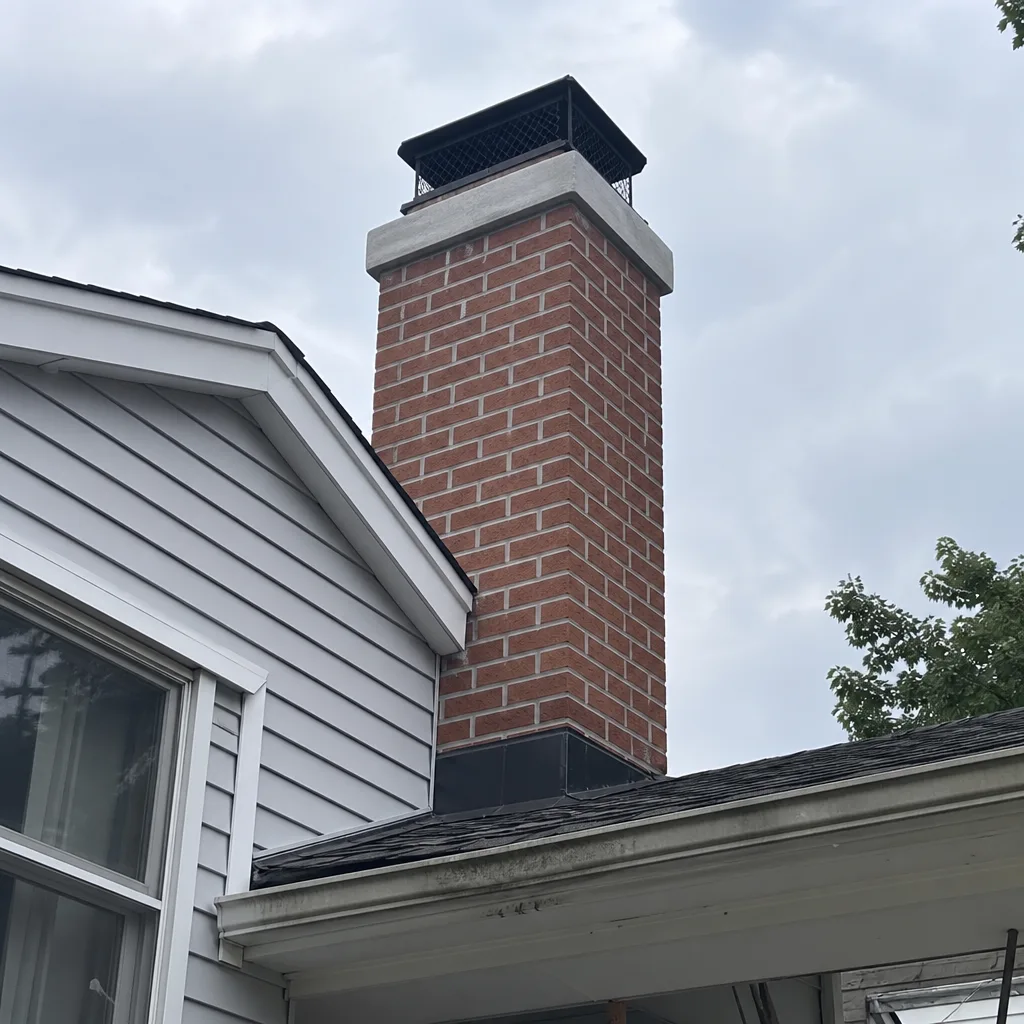 After
After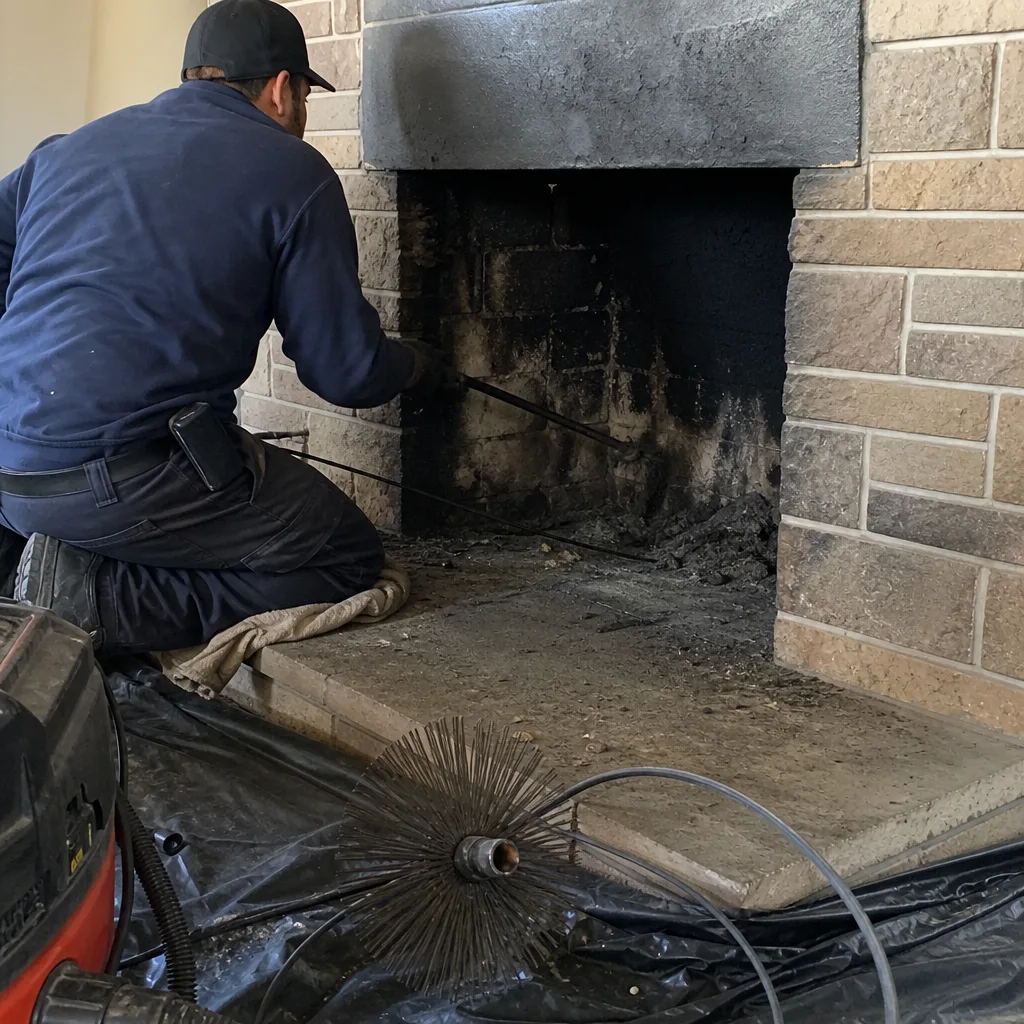 Before
 After
After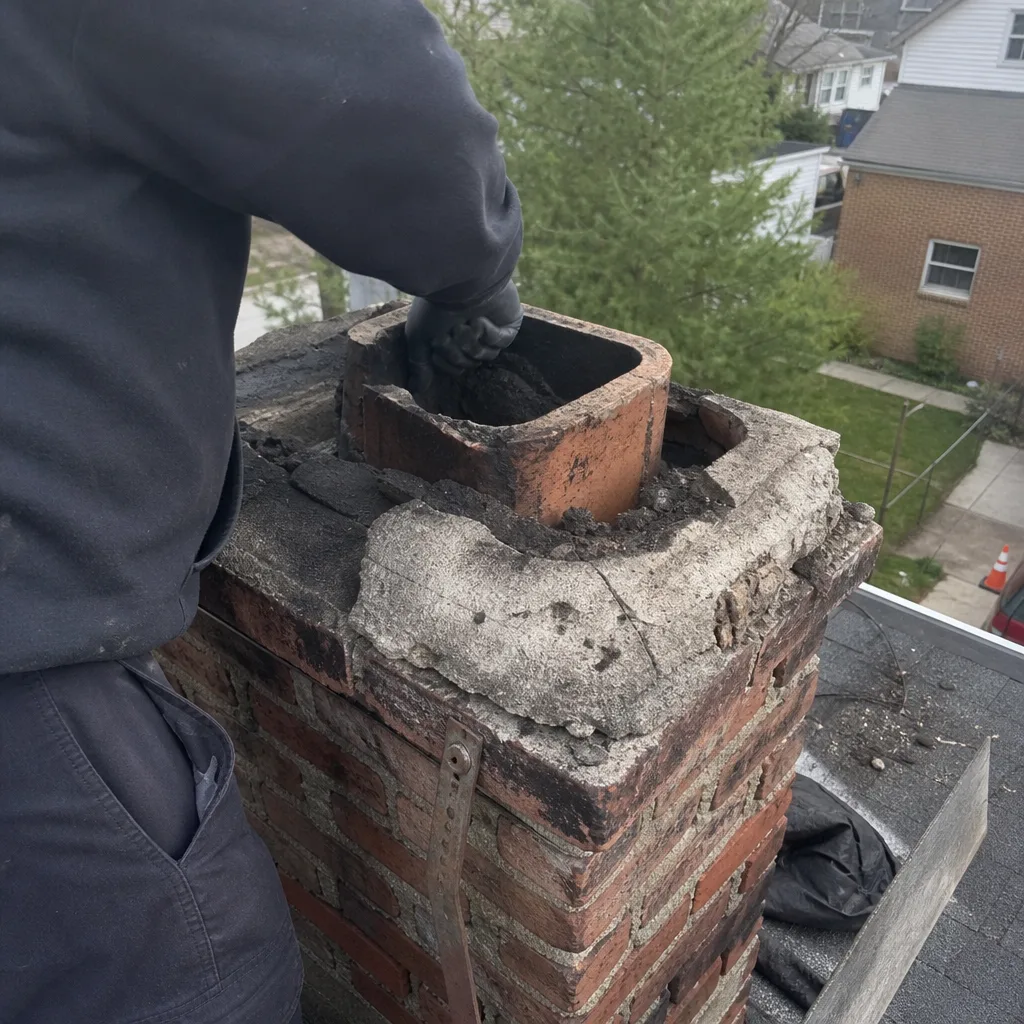 Before
 After
AfterChimney Cleaning Warning Signs: A Elizabeth Homeowner’s Reference Guide
White staining on brick isn’t a cosmetic issue. It’s called efflorescence, and it means water is moving through your masonry and depositing mineral salts on the way out. Most homeowners in Elizabeth paint over it. What it actually signals about your flue liner is what The Complete Guide to Chimney Cleaning in Elizabeth explains. After 42 years of sweeping chimneys in Union County, we’ve learned that most warning signs are visible to anyone who knows what to look at. The problem is simple: nobody teaches homeowners what to look for, so the signals get noticed only after they’ve become structural damage. This reference guide closes that gap with plain descriptions and no alarm-selling.
Quick Answer
The most common chimney warning signs Elizabeth homeowners should watch for are: white efflorescence or rust stains on exterior brick, crumbling mortar or flaking brick faces (spalling), smoke odors when the fireplace is cold, poor draft on mild days, and black staining around the damper frame. These symptoms indicate water intrusion, deteriorating masonry, or creosote buildup that has progressed beyond what a standard brush can remove. A Level-2 camera inspection is the only way to distinguish cosmetic wear from structural failure and determine whether sweeping, repair, or liner replacement is actually needed.
Table of Contents
- Exterior Warning Signs: Reading Your Chimney from the Ground
- Three Indoor Warning Signs That Precede Chimney Fires
- What Stage One, Two, and Three Creosote Look Like
- Cosmetic Deterioration vs. Structural Failure
- Why Your Smoke Alarm During a Low, Slow Burn Means Draft Trouble
- How Elizabeth’s Freeze-Thaw Cycles Accelerate Chimney Damage
- What Happens During a Professional Chimney Inspection
- How Often Elizabeth Homes Need Sweeping
Exterior Warning Signs: Reading Your Chimney from the Ground
You don’t need a ladder to spot most chimney problems. In fact, the best early warnings are visible from your driveway or backyard. The key is knowing which stains and cracks matter, and which ones you can monitor.
Efflorescence: The White Stain That Isn’t Dirt
Efflorescence looks like white chalk or powder on brick surfaces. It forms when water moves through masonry, dissolves mineral salts, and deposits them on the surface as it evaporates. In Elizabeth, we see this constantly on north-facing chimney exposures where sunlight is scarce and moisture lingers.
Here’s what efflorescence actually tells you: water is getting inside your masonry. That water may be entering through cracked crown mortar, deteriorated flashing at the roofline, or porous brick that has lost its protective seal. Once inside, water reaches the flue liner. If your liner is clay tile, repeated wet-dry cycles cause the tiles to expand and contract. Eventually they crack, and cracked tiles allow heat and combustion gases to reach combustible framing.
We inspected a chimney last winter in the Westminster section where the homeowner had power-washed efflorescence three times in two years. The liner had six cracked tiles above the smoke chamber, invisible without a camera. The white stain was the only visible clue.
Spalling: When Brick Faces Fall Off
Spalling is the technical term for brick surfaces that flake, chip, or peel away. It happens when water enters brick, freezes, and expands with enough force to break the face loose. Elizabeth’s climate is particularly hard on brick because we average 25 to 30 freeze-thaw cycles each winter, sometimes more during volatile seasons like 2023-2024.
Spalling that affects more than 10% of visible brick surface, or that exposes the soft inner core of the brick, indicates masonry saturation. This isn’t a tuckpointing job anymore. The chimney needs crown repair or replacement, possibly waterproofing with a vapor-permeable sealant, and an internal inspection to assess liner condition.
Rust Staining: The Color That Shouldn’t Be There
Red-brown or orange streaks running down brick mean metal components are corroding. The usual culprits:
- Corroded chimney cap or chase cover - water runs down the flue and stains the exterior
- Rusted damper frame or firebox components - indicates chronic moisture inside the firebox, often from a leaking cap or poor chimney top sealing
- Deteriorated flashing - roof-level leaks that stain the chimney breast where it meets siding
Rust staining below the roofline on an Elizabeth home built before 1990 often signals an original galvanized chase cover that has reached end of life. These covers typically last 15 to 20 years in our climate. Replacement with a stainless steel cap or custom copper chase cover from a supplier like Gelco eliminates the problem permanently.
Crown Cracks: The Horizontal Surface Everyone Ignores
The chimney crown is the concrete or mortar cap that seals the top of your chimney, sloping water away from the flue. Crowns crack from thermal expansion, poor original construction, or simply age. A hairline crack in crown mortar is worth monitoring. A crack that has opened to where you can fit a dime, or one that runs completely across the crown, is letting water directly into the chimney structure.
In Elizabeth’s older neighborhoods - particularly around Elmora and Keighry Head - we find original crowns made of plain mortar mix rather than proper concrete with reinforcement. These were never going to last 50 years. They often fail at 20 to 30 years, right when homeowners assume the chimney is “fine because it’s brick.”
Three Indoor Warning Signs That Precede Chimney Fires
Chimney fires don’t announce themselves with flames shooting from the top. Most start small, burn briefly, and leave evidence that homeowners miss. The three indoor warning signs below almost always appear before a significant fire event. If you notice any of them, stop using the fireplace and call for an inspection.
1. Persistent Smoke Smell When the Fireplace Is Cold
A fireplace that smells like smoke in summer, or when you haven’t burned in weeks, indicates creosote buildup combined with negative air pressure in your home. Modern Elizabeth homes are tighter than those built in the 1970s. Exhaust fans, range hoods, and HVAC systems pull air from the path of least resistance - which may be your chimney flue, even with the damper closed.
That airflow moves across creosote deposits, carrying odor into living spaces. More importantly, it indicates your chimney is not properly isolated from house air, which means combustion byproducts may not be properly isolated either. This is a carbon monoxide pathway, not merely a smell issue.
2. Poor Draft on Mild Days
Your chimney drafts because warm flue gases are lighter than outside air, creating upward pressure. On mild days - 45 to 55 degrees - the temperature difference is small and draft is weak. If smoke spills into the room on these days but not on cold nights, your flue may be partially obstructed.
The usual obstruction is creosote buildup narrowing the flue, or a bird nest or debris above the damper. In Elizabeth, we also see draft problems caused by exterior chimney locations on one-story additions, where the chimney top is lower than the main roof peak. Wind currents across the higher roof can create downward pressure on the shorter chimney.
A sweep and inspection determines whether the fix is cleaning, a draft-inducing cap, or extending the chimney height. For help choosing the right pro, see How to Hire a Chimney Cleaning Contractor in Elizabeth: A Step-by-Step Guide.
3. Black Staining Around the Damper Frame
Open your damper and look up with a flashlight. Black, sooty staining on the metal frame and the masonry immediately above it indicates smoke has been escaping the firebox into the smoke shelf area. This happens when:
- The flue is too cold at startup, causing smoke to spill until the flue warms
- Creosote buildup has narrowed the flue opening
- The damper is warped or corroded and doesn’t seal or open fully
Smoke escaping past the damper deposits combustible creosote on the smoke shelf and in the smoke chamber. This is the material that ignites in most chimney fires. The black stain is a map of where that material is accumulating.
We document this with our Level-2 camera inspection, showing homeowners the exact location and thickness of deposits. Photos you can see, a plain-English verdict - that’s how we work.
What Stage One, Two, and Three Creosote Look Like
Not all creosote is the same. The stage of creosote in your flue determines whether sweeping is straightforward, requires specialized equipment, or is no longer possible without chemical treatment or liner replacement. Here’s how to recognize each stage, and what each means for your chimney.
Stage One: Soot and Fine Ash
Stage one creosote is loose, powdery, or flaky black material that brushes off easily. It forms from burning dry, seasoned hardwood with adequate air supply. If your chimney produces stage one creosote, your burning habits are correct and sweeping is simple.
Most Elizabeth homeowners with gas inserts or well-maintained wood fireplaces see stage one deposits. A standard rotary sweep with polypropylene brushes removes it completely.
Stage Two: Shiny, Hardened Flakes
Stage two creosote has begun to condense and harden. It appears as glistening black or brown flakes that cling to flue walls. This forms when wood is slightly damp, fires are smoldered overnight, or the flue is oversized for the appliance.
Stage two requires more aggressive cleaning - typically chains or specialized whips on a rotary system. We use professional-grade equipment matched to flue liner material. A clay tile flue tolerates different tools than a stainless steel liner from DuraFlex or Olympia Chimney. Using the wrong tool damages the liner. This is why we inspect before selecting equipment.
Stage Three: Glazed, Tar-Like Coating
Stage three creosote is the dangerous form. It appears as a hard, glossy, black or dark brown coating that looks like enamel or tar. It is highly concentrated fuel. Stage three forms from burning unseasoned wood, chronically damp wood, or from appliances that smolder for long periods.
Stage three creosote cannot be removed with brushes, chains, or standard rotary methods. Attempting to do so risks igniting it. Removal requires chemical treatment to break down the glaze over multiple heating cycles, followed by mechanical cleaning. In severe cases, the liner is compromised and replacement is the only safe option.
In our experience across Elizabeth, stage three creosote is most common in homes where the fireplace is used as a primary heat source during power outages, or where homeowners burn construction scraps, painted wood, or pallets. These practices also void most homeowner insurance policies if a fire occurs.
The critical distinction: stage one and two creosote are maintenance issues. Stage three is a safety hazard that may require immediate cessation of use.
Cosmetic Deterioration vs. Structural Failure
Every old chimney in Elizabeth shows some wear. The question is whether that wear threatens the structure or merely signals age. Homeowners waste money on unnecessary rebuilds and risk safety by ignoring genuine problems. Here’s how to tell the difference without a camera, and when a camera becomes essential. For more guides & resources on chimney maintenance, visit our blog.
Cosmetic Issues You Can Monitor
- Minor mortar erosion between bricks - joints recessed less than 1/4 inch, with no loose bricks. Tuckpointing can wait a season or two.
- Isolated efflorescence on one exposure - often from a single flashing leak or gutter overflow, corrected at the source.
- Small crown hairline cracks - less than 1/16 inch wide, not extending to edges. Seal with proper crown sealant and recheck annually.
- Weathered brick texture - surface roughness without face loss. Normal aging for 50+ year brick in our climate.
Structural Issues Requiring Prompt Action
- Spalling affecting multiple courses - especially if inner brick core is exposed and soft.
- Leaning or bulging chimney - any visible displacement from plumb. This indicates foundation settlement or deteriorated interior support.
- Missing or displaced bricks - gaps that allow water directly into the chimney structure.
- Crown cracks that have opened to 1/8 inch or more - water is entering in volume, and freeze-thaw damage accelerates exponentially.
- Staining or damage to interior walls adjacent to chimney - water has penetrated completely through the masonry.
The Camera Changes Everything
Visual inspection from the roof or ground cannot see inside the flue. A chimney can look sound externally while the liner is cracked, the smoke chamber is eroded, or stage three creosote coats the entire flue. This is why the National Fire Protection Association recommends Level-2 inspection for real estate transactions, after chimney fires, and when changing appliance types.
Our Level-2 inspection uses a high-resolution camera system to document every inch of the flue, smoke chamber, and firebox. You see what we see. Nothing is recommended without photo evidence, and we plainly state when work can safely wait. That’s the square deal: no surprises on the bill, and no pressure for work that isn’t needed.
Why Your Smoke Alarm During a Low, Slow Burn Means Draft Trouble
Smoke alarms near fireplaces sometimes trip during what homeowners describe as “a small fire” or “just keeping it going overnight.” The instinct is to change the battery or move the alarm. The correct response is to examine your chimney draft.
Low, slow burns produce more creosote and less heat than active fires. The flue gas temperature may be too low to establish strong draft, especially if:
- The flue is partially obstructed by creosote or debris
- The outside air temperature is mild, reducing natural draft pressure
- The house is under negative pressure from exhaust fans or HVAC
- The firebox-to-flue ratio is mismatched for the appliance
When draft is insufficient, smoke and carbon monoxide spill into the room rather than exiting the chimney. The smoke alarm is doing its job. Moving it or disabling it removes warning while the hazard remains.
In Elizabeth’s tighter homes, particularly ranch-style houses from the 1960s and 1970s that have been weatherized, we see this pattern repeatedly. The solution is not a new smoke alarm. It’s a sweep to remove obstructions, inspection to verify flue sizing, and sometimes a draft-improving cap or exterior air supply.
Call for inspection if your alarm has tripped during fireplace use even once. Carbon monoxide is odorless, and low-level exposure causes symptoms that mimic flu or fatigue - headaches, nausea, confusion. The alarm may be the only warning you get.
How Elizabeth’s Freeze-Thaw Cycles Accelerate Chimney Damage
Elizabeth’s location in the urban heat island of northeastern New Jersey creates specific chimney stresses that homeowners in rural Warren or Sussex counties don’t face. Understanding these local factors helps explain why your chimney may deteriorate faster than expected.
The Freeze-Thaw Math
Brick and mortar are porous. Water enters, freezes, and expands approximately 9% in volume. Each cycle does incremental damage. Elizabeth averages 25 to 30 freeze-thaw cycles annually, concentrated in January through March when daytime highs reach 40 degrees and nighttime lows drop below freezing.
Chimneys are particularly vulnerable because they’re vertical, exposed on all sides, and often located on the coldest exterior wall. The north and east exposures in Elizabeth neighborhoods like Bayway and South Elmora see the most spalling because they receive least sun and stay frozen longest.
Urban Pollution and Acid Rain
Elizabeth’s industrial heritage and current port and refinery activity contribute to atmospheric sulfur and nitrogen compounds. These combine with moisture to form mild acid precipitation that accelerates mortar deterioration. We’ve noted faster mortar erosion in chimneys within two miles of the waterfront compared to those in western Union County.
Salt Air from the Arthur Kill
Homes near the waterfront, particularly in the Port Elizabeth and Elizabethport areas, experience salt-laden air that corrodes metal chimney components faster than inland locations. Stainless steel caps and liners from quality manufacturers like DuraFlex resist this corrosion; galvanized or lower-grade materials do not.
What This Means for Maintenance Timing
Because freeze-thaw damage accelerates exponentially once started, Elizabeth chimneys benefit from pre-winter inspection and repair. Crown sealing, tuckpointing, and cap replacement done in September or October prevent water entry before the damaging cycle begins. Waiting until spring means another winter of progressive damage.
Our $89 Seasonal Tune-Up, available before November 1st each year, includes sweep, basic inspection, and written condition report. It’s designed for exactly this timing.
What Happens During a Professional Chimney Inspection
Homeowners often delay inspection because they don’t know what to expect, or they fear a high-pressure sales pitch. Here’s exactly what happens when you schedule with Hearthstone Chimney Co. for chimney cleaning and sweep in Elizabeth, and what documentation you’ll receive.
Step-by-Step: The Hearthstone Inspection Process
- Exterior evaluation from ground and roof - We photograph crown, cap, brick condition, and flashing from accessible positions. No drone photography; we need to probe and test.
- Firebox and damper examination - Check for cracks, rust, proper damper operation, and clear opening.
- Smoke chamber and flue camera scan - Our Level-2 camera enters the flue from below, documenting liner condition, creosote deposits, and any obstructions. You see the feed in real time if you’re present.
- Combustible clearance verification - Measure clearances to framing and confirm compliance with current codes.
- Written report with photos - Delivered within 24 hours via email, with plain-English descriptions of each finding and prioritized recommendations.
What We Don’t Do
We don’t use inspection as a pretext to find work. Our 90-Day Done Right Promise - Krafted right, Every time, Your home first, Standing behind it - governs every recommendation. If work can wait, we say so. If a liner has ten years of life remaining, we document that and recommend re-inspection in two years. Photos you can see, a plain-English verdict. That’s how we’ve operated since 1984.
For repair work beyond sweeping, we provide itemized estimates with no-hassle upfront pricing. The number on the estimate is the number on the invoice. No surprises on the bill.
How Often Elizabeth Homes Need Sweeping
The standard NFPA recommendation is annual inspection, with sweeping as needed based on fuel type and use. Here’s how that translates for typical Elizabeth homes.
| Fuel Type | Use Pattern | Inspection Frequency | Typical Sweeping Frequency |
|---|---|---|---|
| Dry seasoned hardwood | 2-3 fires/week, winter only | Annual | Every 1-2 years |
| Softwood or mixed wood | Regular winter use | Annual | Annual |
| Gas fireplace or insert | Regular use | Annual | Every 2-3 years (debris check) |
| Pellet stove | Primary heat source | Annual | Per manufacturer schedule |
| Oil or gas furnace | Connected to chimney | Annual | As inspection indicates |
Elizabeth’s older housing stock includes many homes with furnaces still venting into original clay tile chimneys. These systems require particular attention because:
- Modern high-efficiency furnaces produce cooler exhaust that condenses in oversized flues
- Condensation accelerates clay tile deterioration
- Blocked or deteriorated furnace flues cause carbon monoxide backup, not just efficiency loss
If your furnace shares a chimney with a fireplace, or vents into a chimney that once served a coal furnace, annual inspection is non-negotiable. The combination of old flue sizing and modern appliance output creates hazards that aren’t visible without a camera.
Common Mistakes to Avoid
- Assuming a gas fireplace needs no maintenance. Gas appliances produce water vapor and can degrade chimney interiors. Debris from deteriorated caps also blocks flues. Annual inspection catches these issues before they become dangerous.
- Burning construction scraps or treated lumber. Pressure-treated wood, plywood, and painted materials release toxic compounds and accelerate creosote formation. We’ve replaced liners in Elizabeth’s older homes where years of scrap burning created stage three deposits throughout.
- Ignoring mild smoke smell as “just how old chimneys are.” Persistent odor indicates creosote buildup and possible negative pressure issues. Both are correctable, and both worsen if left unaddressed.
- Hiring based on lowest price without verifying insurance and licensing. New Jersey requires chimney sweeps to carry proper liability insurance. Ask for certificate of insurance. Hearthstone carries full coverage and provides documentation on request.
- Attempting DIY creosote removal with hardware store brushes. Standard brushes don’t reach smoke chamber corners or remove stage two and three deposits. Worse, improper technique can damage clay tile or dislodge debris that blocks the flue.
- Waiting for visible exterior damage before calling. By the time spalling or staining is obvious, water has often compromised the liner. Earlier intervention costs less and prevents safety hazards.
- Accepting inspection without photo documentation. A verbal “looks fine” or handwritten checklist without images gives you no record and no way to verify claims. Insist on dated, labeled photographs of every finding.
When to Call a Professional
Call for inspection immediately if you notice any of the following: smoke entering the room during normal fireplace use, a smoke alarm that trips during fires, visible cracks in the firebox or damper frame, white or rust staining on exterior brick, pieces of brick or mortar on the ground or roof, or a persistent smoke odor when the fireplace is cold. These symptoms indicate conditions that worsen with use and may create fire or carbon monoxide hazards.
For routine maintenance, schedule inspection before the burning season begins. In Elizabeth, that means September or October for wood-burning fireplaces, or before first sustained furnace operation for heating system chimneys.
Hearthstone Chimney Co. offers free estimates in Elizabeth. A live person answers every call, 24 hours a day, 7 days a week - not a voicemail, not a callback queue. Call (908) 923-3159 to schedule, or to request a free second opinion on any written estimate you’ve received elsewhere. We’ll be there when we say. Done right - and we stand behind it.
Frequently Asked Questions
A standard chimney sweep and Level-1 inspection in Elizabeth typically ranges from $175 to $325, depending on accessibility, flue condition, and whether the fireplace or stove insert must be partially disassembled for proper access. Level-2 camera inspections add $100 to $200 but provide photo documentation of flue liner condition that a basic sweep cannot. Hearthstone offers a $89 Seasonal Tune-Up before November 1st each year, which includes sweep, basic inspection, and written report. Call (908) 923-3159 for an exact quote - estimates are free.
You need a new liner only if the existing liner is cracked, deteriorated, or improperly sized for your appliance - and only if that condition is documented with camera evidence you can see yourself. Many Elizabeth homes with clay tile liners have decades of service remaining if the tiles are intact and joints are tight. We recommend liner replacement when cracks allow heat or combustion gases to reach combustible framing, or when the flue is too large for modern efficient appliances. If your sweep recommends liner replacement without showing you camera images of specific damage, get a second opinion. Hearthstone provides free second opinions on any written estimate.
Annual inspection is recommended for all chimneys, with sweeping frequency determined by use and fuel type. Wood-burning fireplaces used regularly need sweeping every one to two years if burning dry hardwood, or annually if burning softwood or operating frequently. Gas fireplaces need inspection annually but sweeping only every two to three years to check for debris or deterioration. Furnace flues in Elizabeth’s older homes require annual inspection because modern high-efficiency appliances produce condensation that damages old clay tile. The specific schedule for your home depends on inspection findings, not calendar alone.
Skipped maintenance leads to progressive creosote buildup, which restricts draft and increases chimney fire risk. Water intrusion through uncorrected crown or flashing leaks causes mortar deterioration, spalling, and eventually structural compromise. In Elizabeth’s climate, freeze-thaw damage accelerates once started, turning a $300 crown repair into a $3,000 rebuild over five to ten years. For furnace flues, deterioration can allow carbon monoxide into living spaces without visible warning. The cost of prevention is always lower than the cost of repair or the consequences of fire or poisoning.
Homeowners can and should monitor exterior condition and note any changes in fireplace performance. However, internal flue inspection requires specialized camera equipment and training to interpret findings. You cannot see creosote buildup, cracked tiles, or smoke chamber deterioration from the firebox. Professional inspection also verifies combustible clearances and appliance installation against current codes. Think of homeowner monitoring as checking your oil level, and professional inspection as the diagnostic scan that finds problems the dipstick cannot.
Summer chimney odor results from the combination of creosote deposits and negative air pressure in tightly sealed homes. Warm outside air reduces natural draft, allowing house air to flow down the chimney rather than up. In Elizabeth’s humid summers, moisture activates odor compounds in creosote. The smell is unpleasant and indicates that your chimney is communicating with house air - which means combustion byproducts could also enter under certain conditions. A sweep removes the odor source, and inspection can identify whether an outside air supply or draft-improving cap would help.
A chimney sweep removes combustible deposits from the flue, firebox, and smoke chamber. An inspection evaluates structural condition, liner integrity, clearances, and appliance installation. They are related but distinct services. Sweeping without inspection misses structural problems. Inspection without sweeping leaves combustible material in place. Hearthstone typically performs both together, with the inspection determining whether sweeping alone is sufficient or whether repair is needed. The work is documented with photos and a written report either way.
The Bottom Line
Most chimney warning signs are visible to homeowners who know what to look for. White efflorescence signals water intrusion that threatens liners. Spalling brick indicates freeze-thaw damage that accelerates rapidly in Elizabeth’s climate. Indoor smoke odor, poor draft, and damper staining precede most chimney fires. Stage three creosote cannot be brushed away and requires professional intervention. The key is distinguishing cosmetic aging from structural failure, which requires camera inspection and plain documentation. Don’t wait for visible collapse or a smoke alarm emergency. Schedule inspection, see the evidence, and make informed decisions about what your chimney actually needs.
Written by Russell Haines, Owner at Hearthstone Chimney Co., serving Elizabeth since 2014.