
Last updated September 10, 2026
Level 1 sweep and inspection to the NFPA 211 annual standard - flue, crown, cap, and flashing checked and photographed
Chimney sweep logs do not sweep chimneys. They loosen some creosote - which then falls where a brush and vacuum still have to collect it.
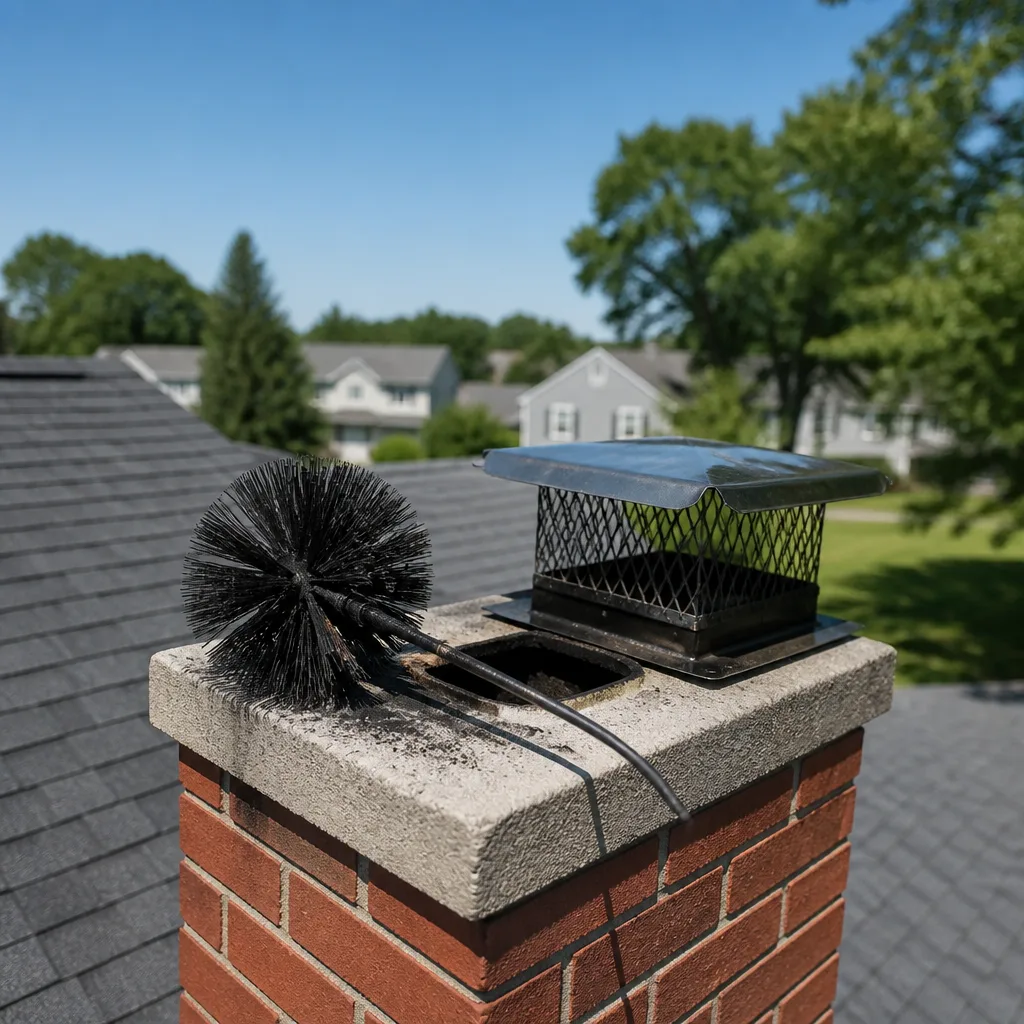
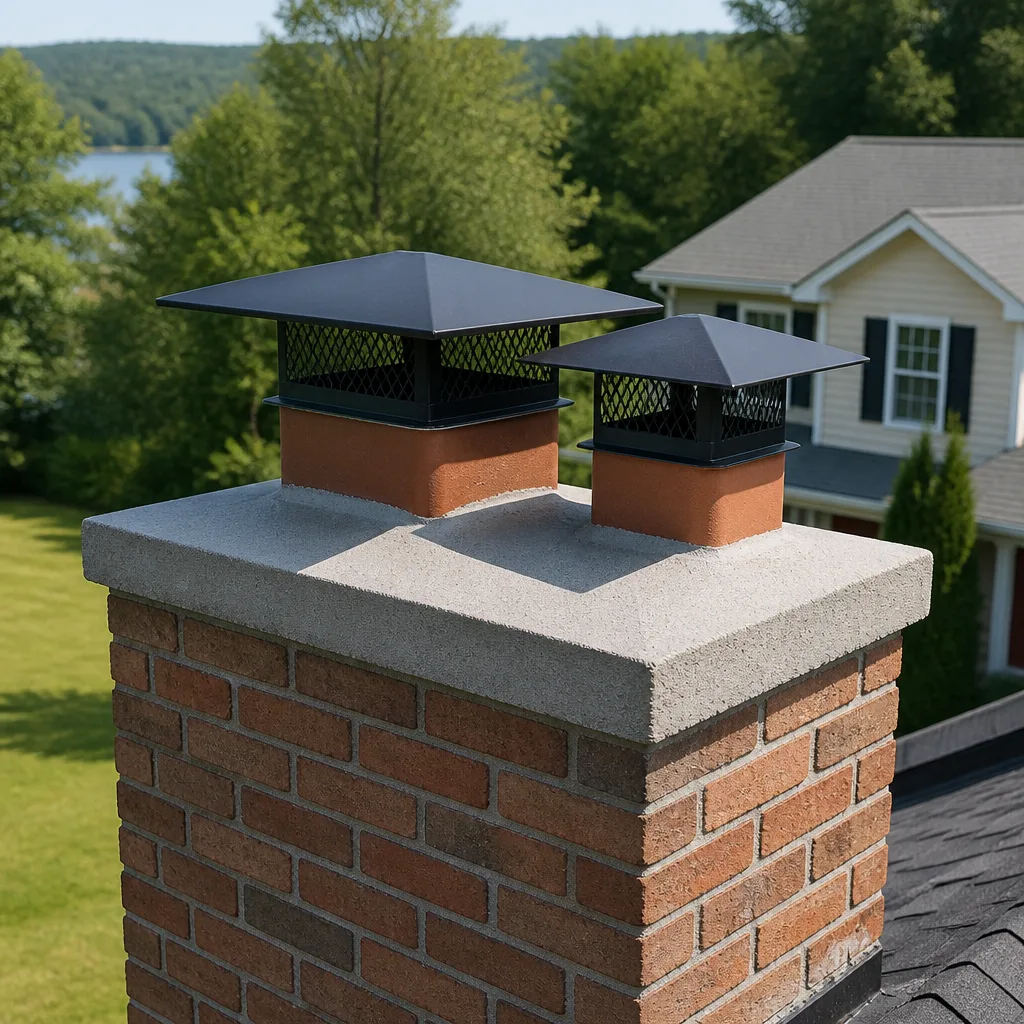
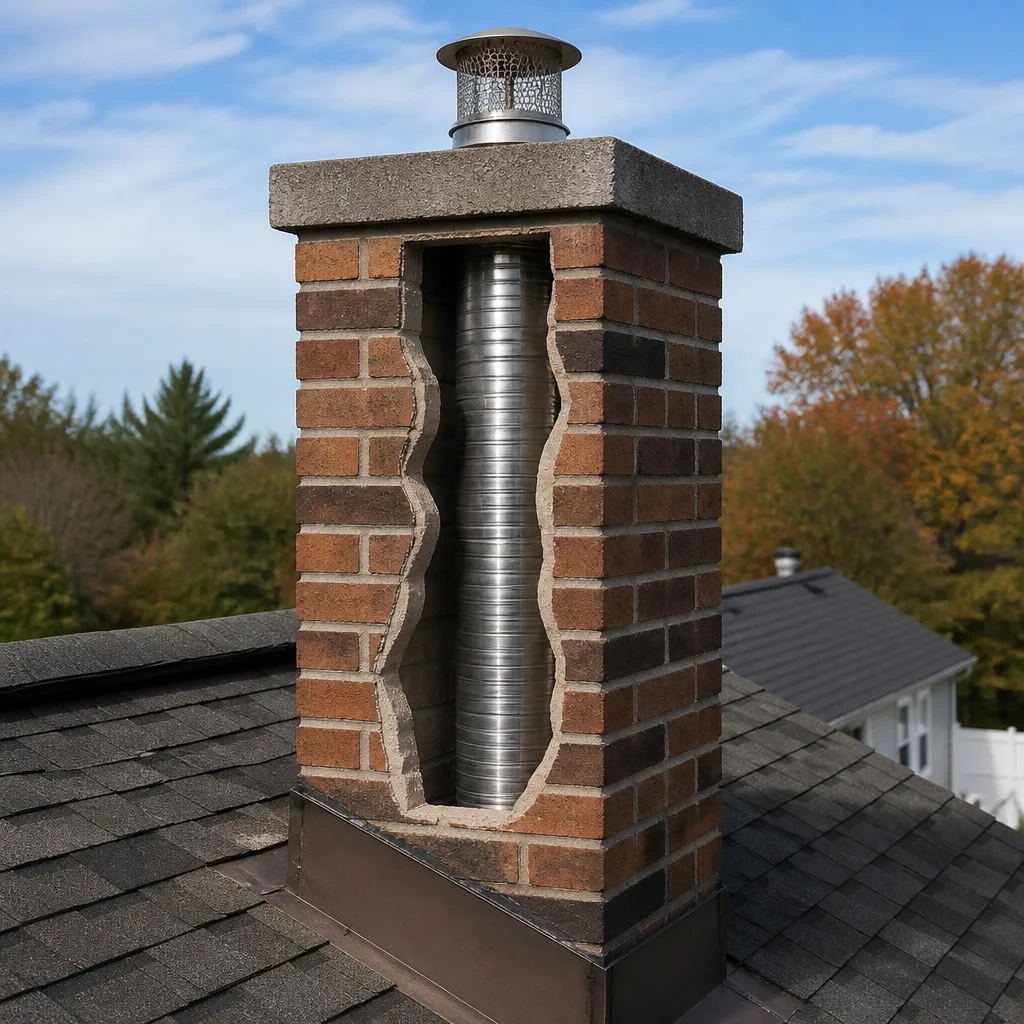
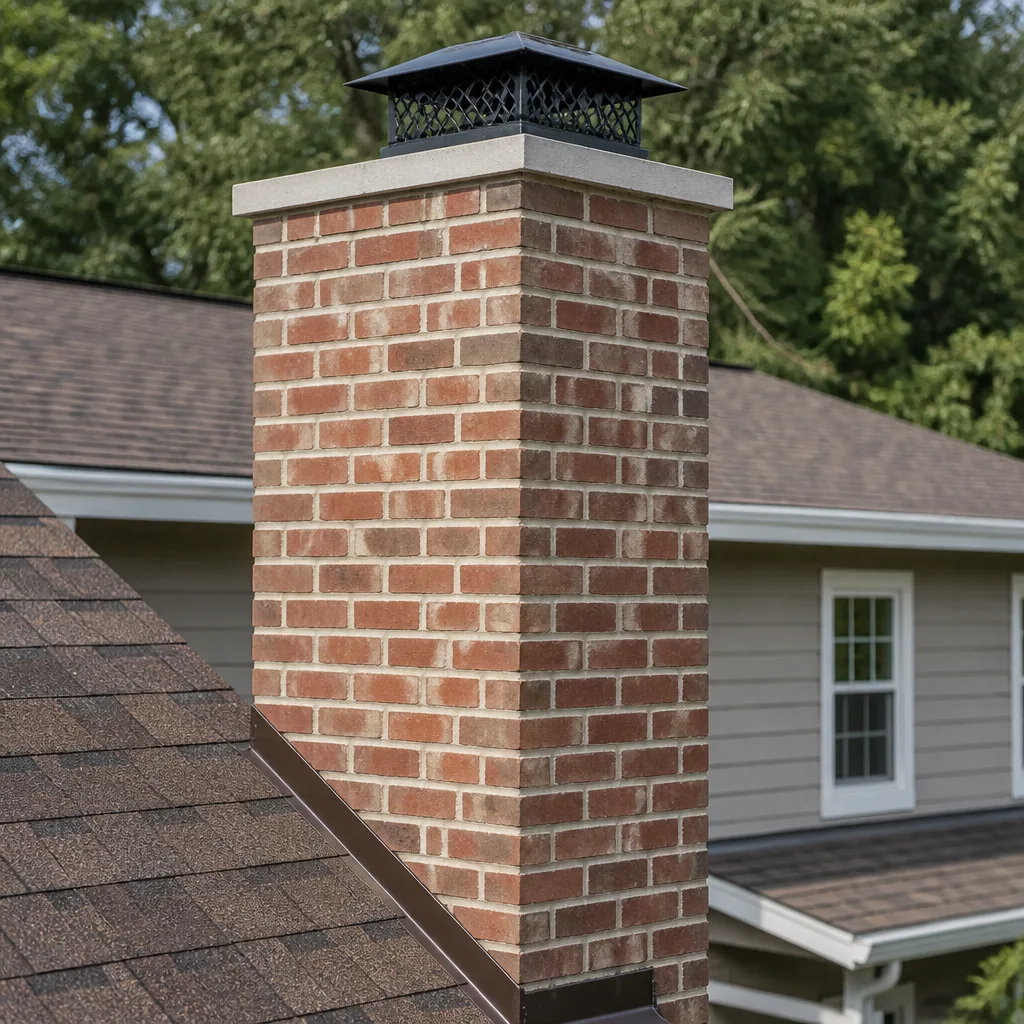
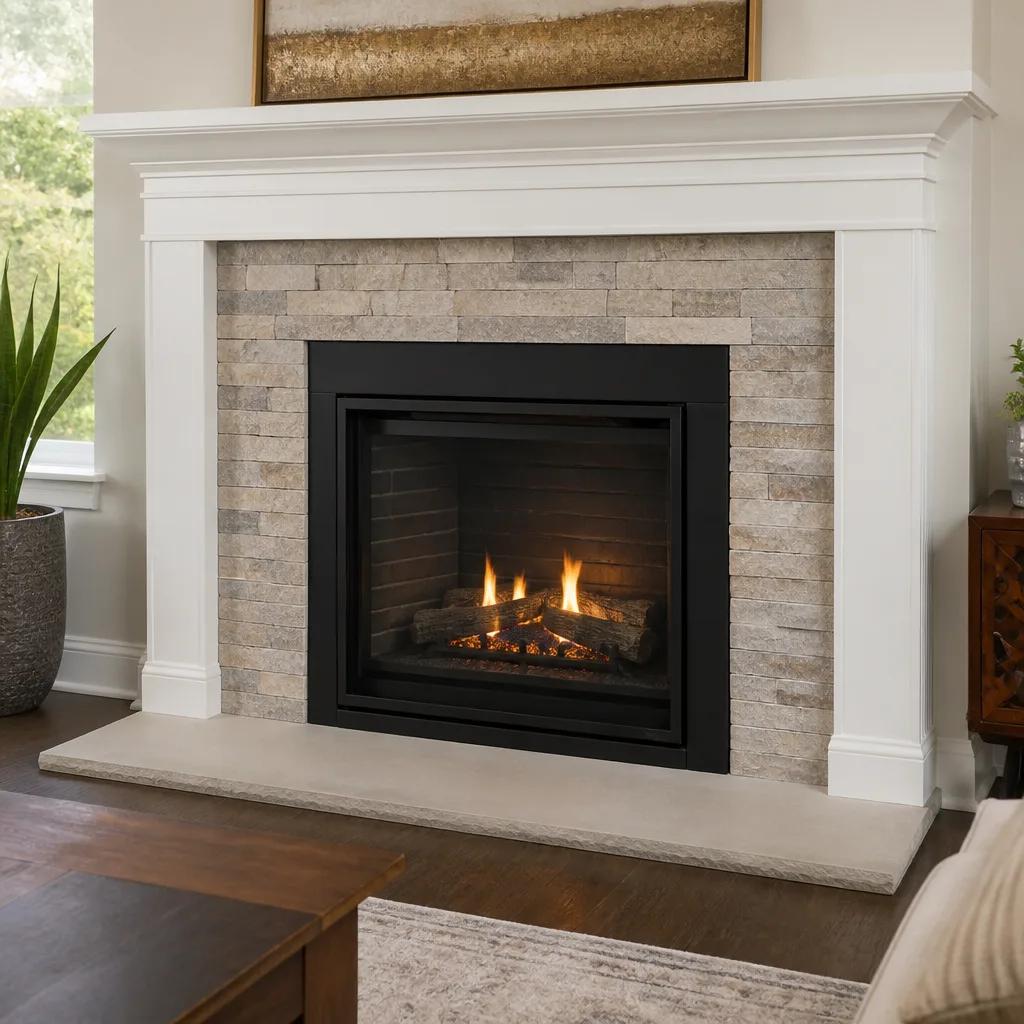
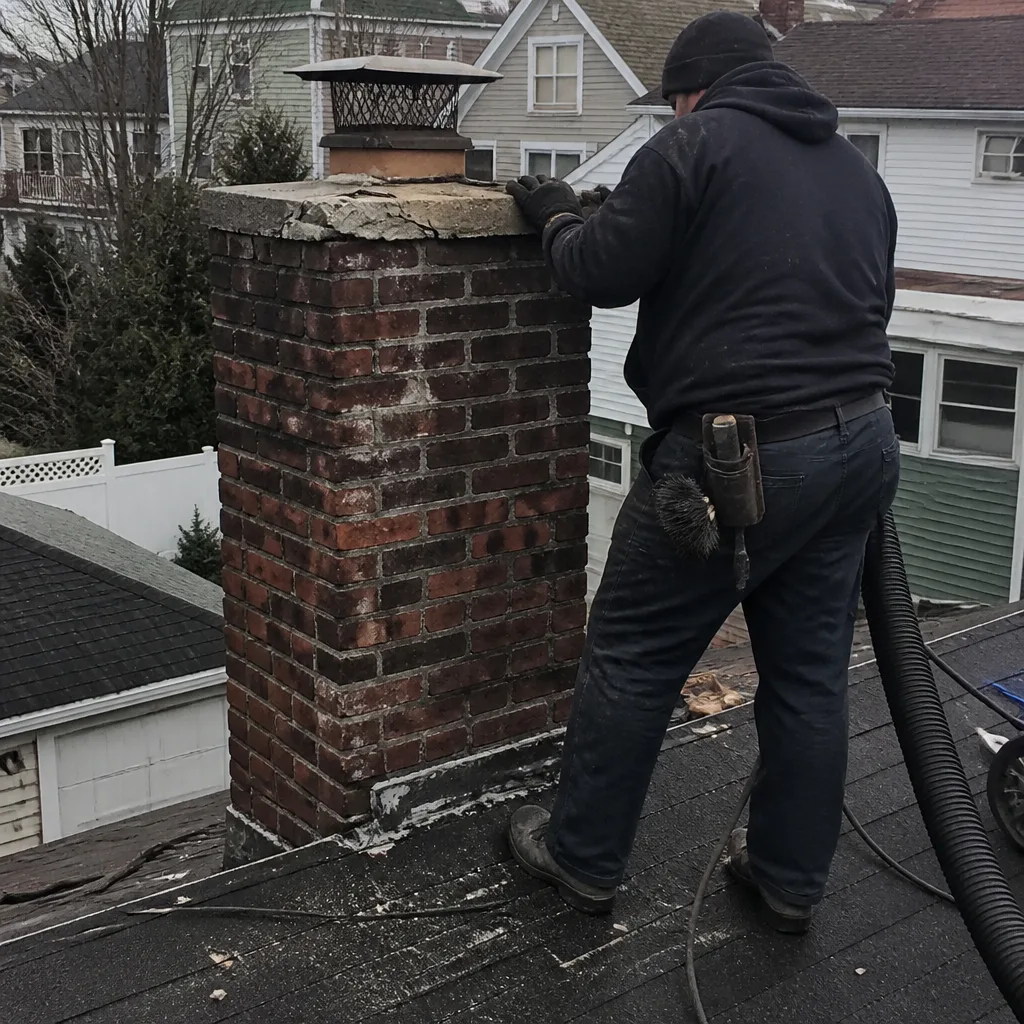 Before
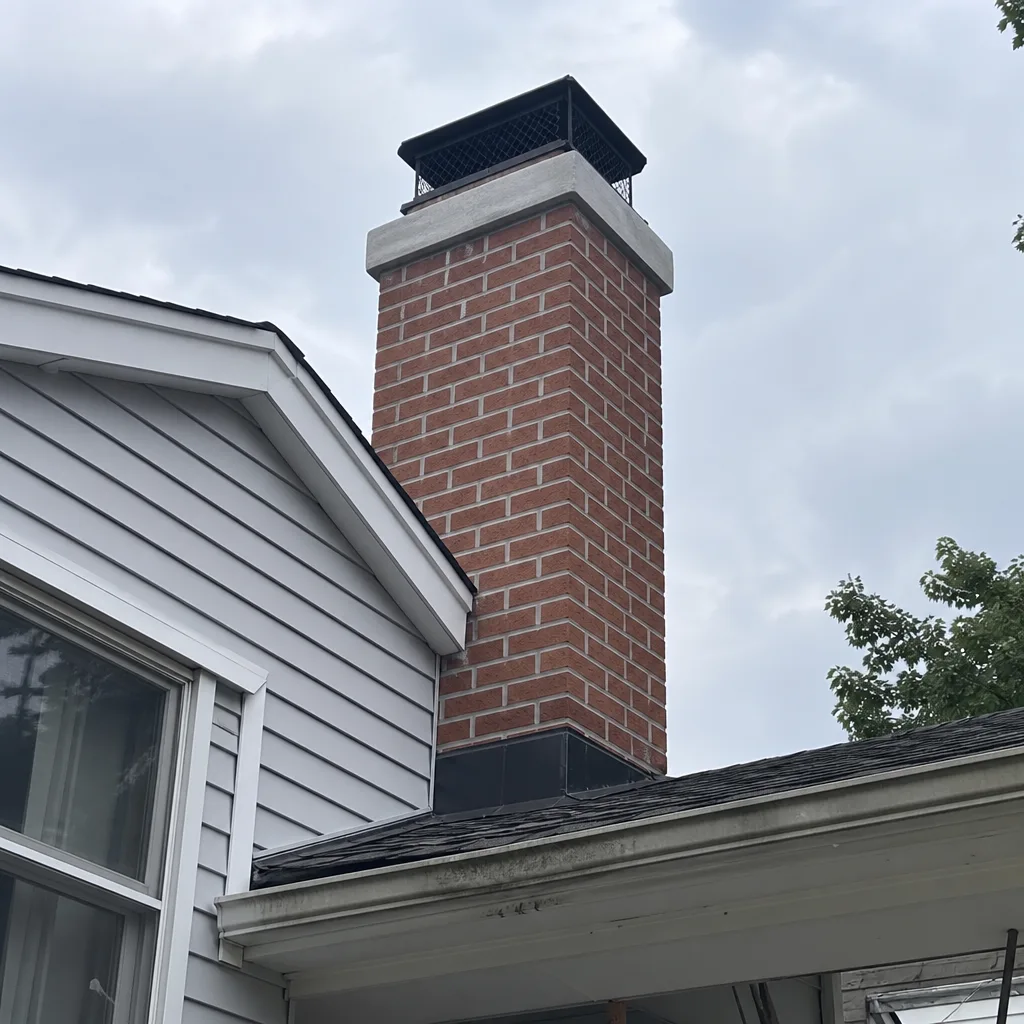 After
After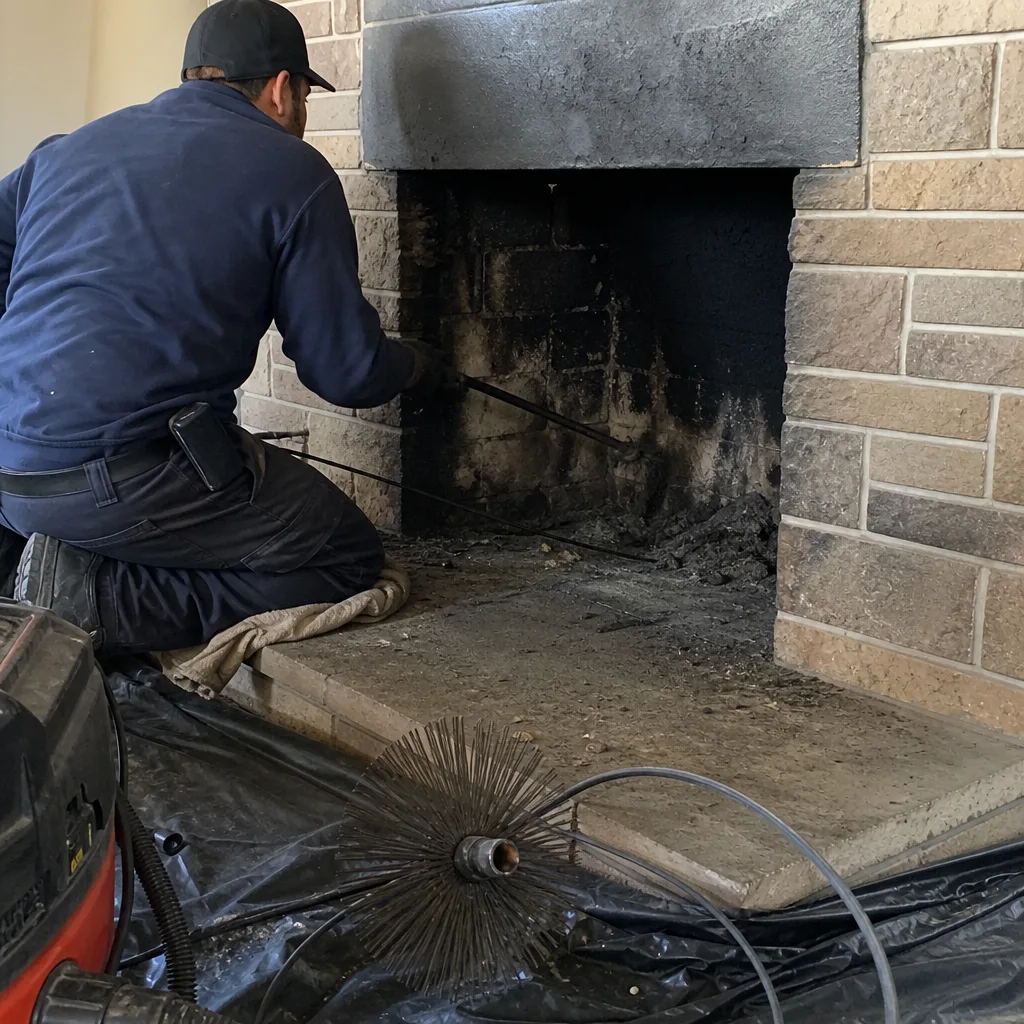 Before
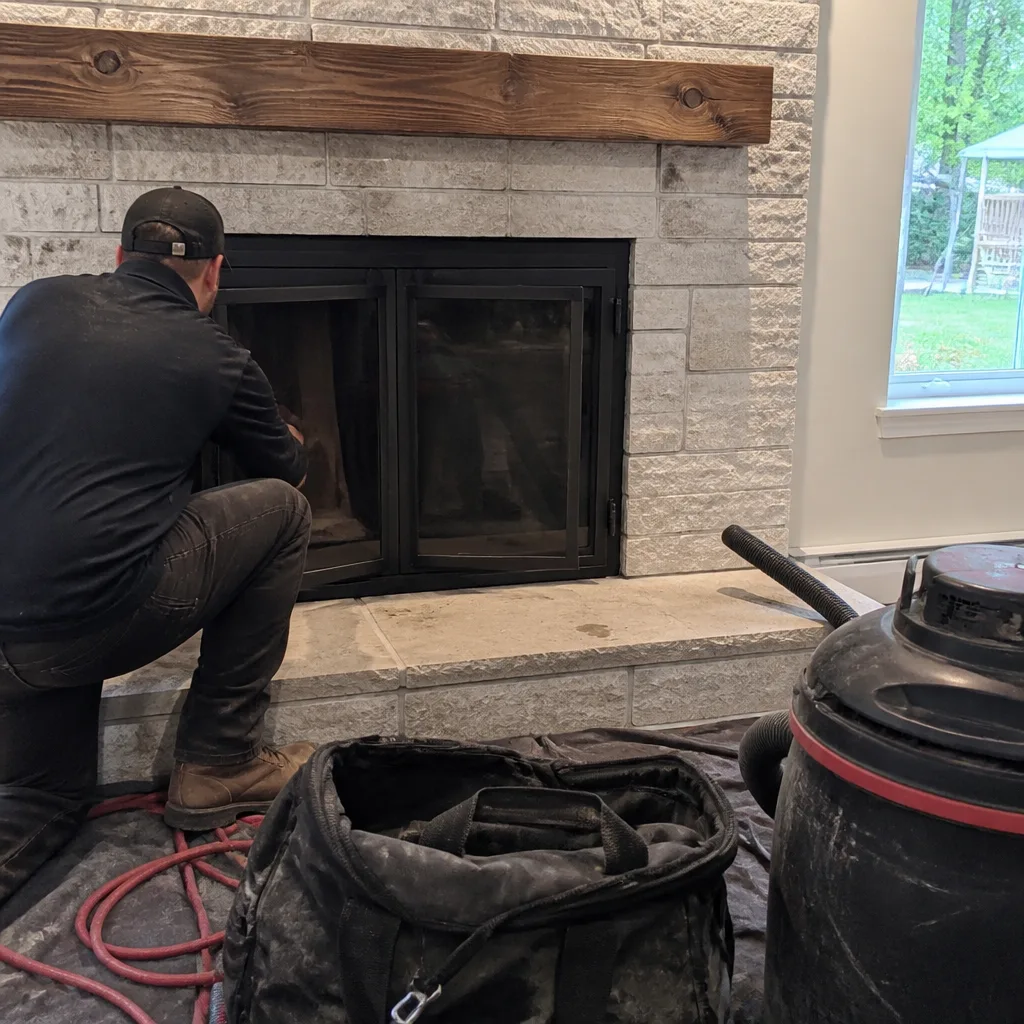 After
After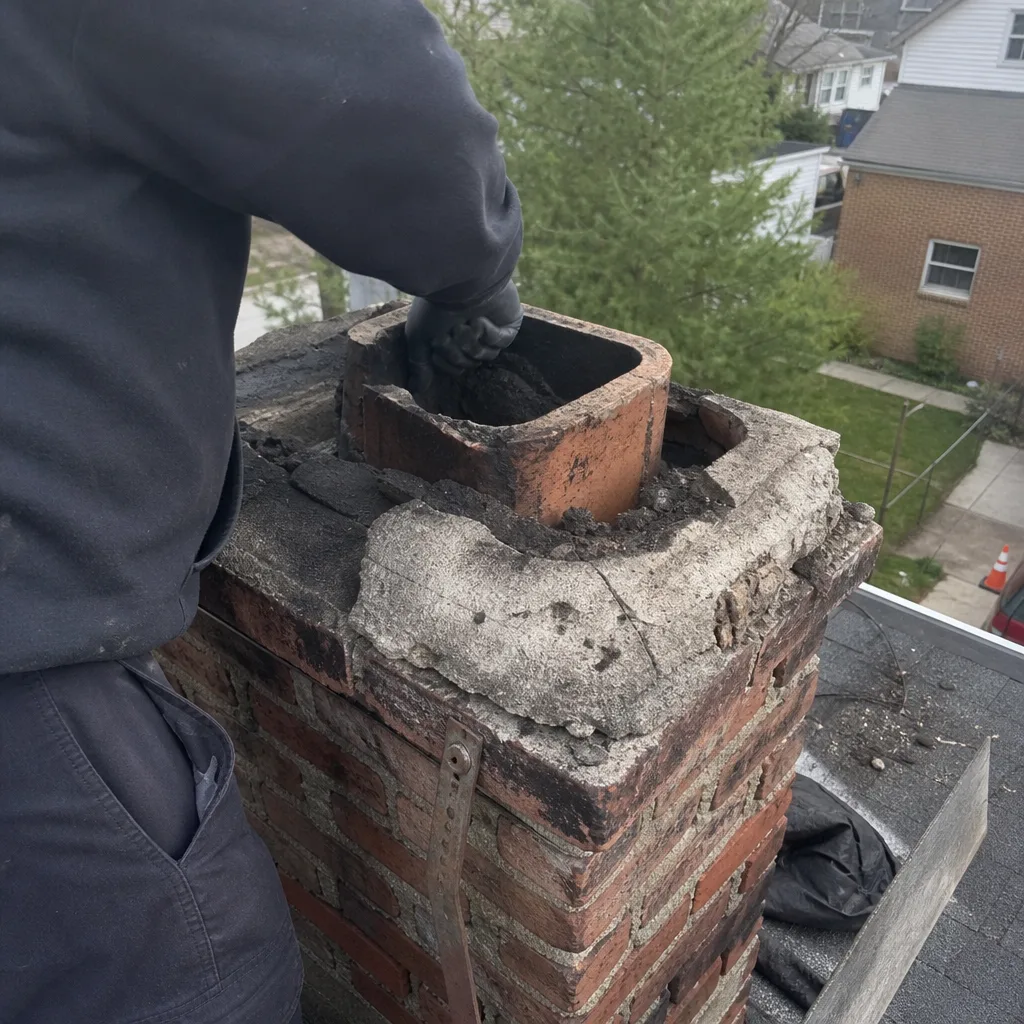 Before
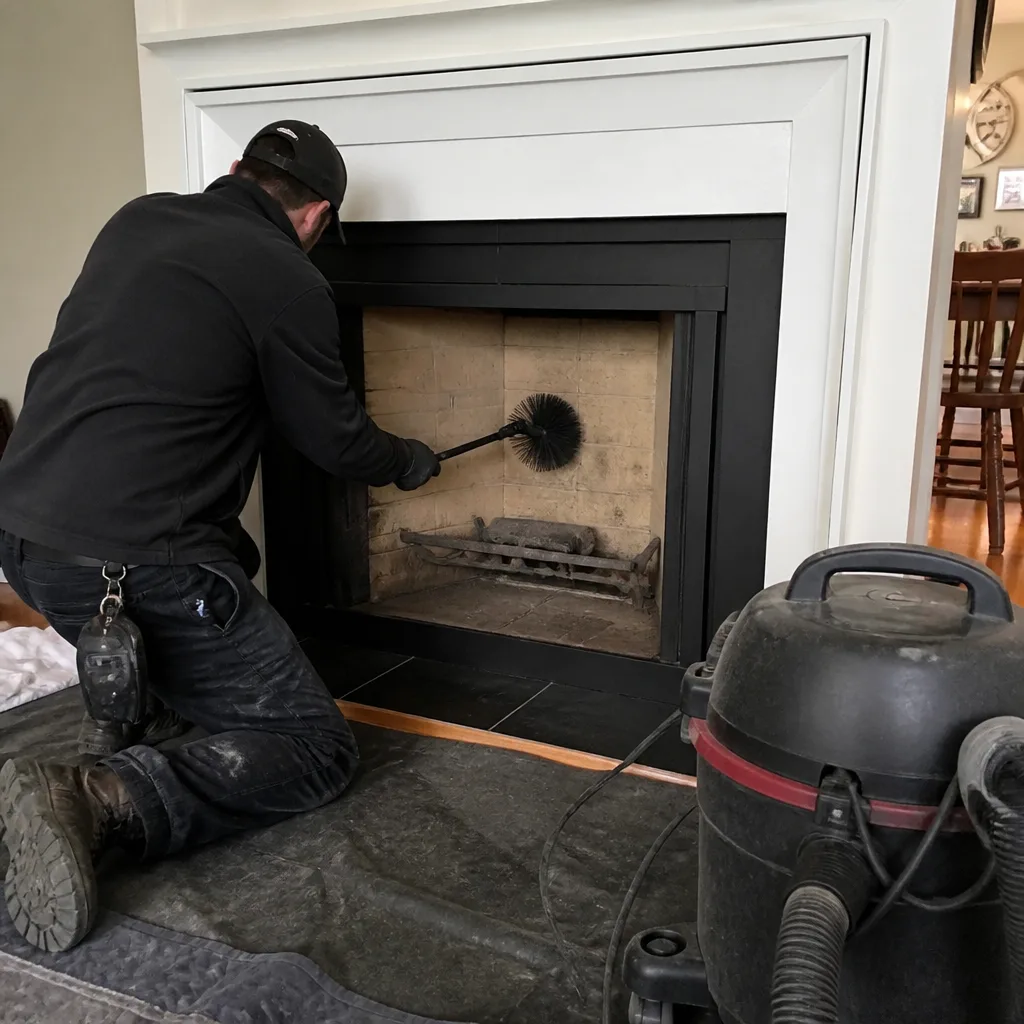 After
AfterDIY vs Professional Chimney Cleaning: The Elizabeth Homeowner’s Decision Guide
Every fall in Elizabeth, we field calls from homeowners who’ve already bought the brush kit. They’re capable people, often retired tradesmen or engineers who’ve maintained their own homes for decades. And they’re calling because something didn’t feel right halfway down the flue, or because the brush came back with something they didn’t expect, or because they swept it last year and the fireplace still smells like a campfire in July. Here’s what we’ve learned in 42 years: running a brush through a straight flue is not the hard part. The hard part is knowing whether the flue is still straight, whether the liner is still intact, and whether the creosote you’re removing is telling a story about a problem the brush cannot fix. This guide separates the cleaning from the inspection so you can decide honestly, without the scare tactics or the false confidence.
Quick Answer
Most Elizabeth homeowners can safely remove light, stage-one creosote from a simple, straight flue with a basic brush kit. What they cannot do is assess the structural condition of the flue, identify hidden liner damage, or remove glazed creosote without professional-grade equipment. For homes built before 1980 in Elizabeth, which describes most of our housing stock, we recommend professional cleaning with a Level-2 camera inspection annually, as outlined in our guide on How to Hire a Chimney Cleaning Contractor in Elizabeth: A Step-by-Step Guide. The inspection, not the brushing, is what prevents chimney fires and carbon monoxide intrusion.
Table of Contents
- What DIY Chimney Cleaning Can Actually Accomplish
- The Tools You Need, and the Ones You Don’t Own
- Why Elizabeth’s Older Housing Stock Changes the DIY Calculus
- When DIY Cleaning Is Reasonable, and When It Is Genuinely Risky
- What a Professional Cleaning Documents That DIY Cannot
- The Monthly Maintenance Routine Every Elizabeth Homeowner Should Do
- Cost Comparison: DIY Kits vs Professional Service in Elizabeth
- Making the Decision: A Framework for Elizabeth Homeowners
What DIY Chimney Cleaning Can Actually Accomplish
A competent homeowner with a $35 to $60 polypropylene brush kit, extension rods, a shop vacuum with a HEPA filter, and a few hours of free time can accomplish something real. They can remove loose, flaky, stage-one creosote from a relatively straight flue. They can push out leaf debris, bird nests, and the accumulated soot of a season’s moderate use. They can inspect the firebox for obvious cracks, check that the damper opens and closes fully, and confirm the chimney cap is present and intact.
This is not nothing. In a newer home with a factory-built fireplace, a single appliance, and a documented installation history, annual DIY cleaning with vigilant self-inspection may be adequate for a few years.
But we need to be precise about what “cleaning” means here. Creosote forms in three stages:
- Stage one: Sooty, dusty, easily brushed away. A homeowner can remove this.
- Stage two: Shiny, flaky, harder to dislodge. Requires a stiffer brush, more effort, and carries higher particulate exposure.
- Stage three: Glazed, hardened, tar-like. Cannot be removed with homeowner tools. Requires rotary cleaning with chains or whips at controlled speed, often with chemical treatment beforehand. Attempting this with a hand brush will polish the surface without removing the hazard.
The problem is that most homeowners cannot distinguish stage two from stage three from the firebox looking up. We’ve been called to Elizabeth homes in the Westminster section where the homeowner “cleaned it last month” and we still extracted five gallons of stage-three glaze. The brush went through. The creosote stayed.
DIY cleaning also cannot evaluate what happens at the smoke chamber, the flue offset, or the liner connection. These are the places where chimney fires start and carbon monoxide leaks occur. The brush is not the point. The point is knowing whether the passage the brush travels through is still safe.
The Tools You Need, and the Ones You Don’t Own
Let’s be direct about capability and equipment.
What a homeowner can reasonably acquire:
- Polypropylene or wire brush sized to the flue diameter ($25-$55)
- Flexible fiberglass extension rods, typically 3 to 6 feet each ($30-$60)
- Drop cloths, dust masks (N95 minimum), safety glasses, work gloves
- Shop vacuum with fine particulate filter ($80-$150, or borrowed)
- Flashlight and inspection mirror for firebox and damper check
What a professional brings that a homeowner cannot access:
- Video inspection camera with 360-degree rotation and LED lighting, capable of navigating flue offsets and documenting findings to NFPA 211 standards
- Rotary cleaning systems (spinning chains, whips, or polypropylene heads) powered by variable-speed drills, sized to liner material and creosote stage
- HEPA-filtered industrial vacuums with triple-filtration that capture particles below 0.3 microns
- Combustible gas detectors and CO meters for ambient air testing
- Access equipment for steep roofs, including proper ladders, roof brackets, and fall protection
- Chemical treatments for stage-three creosote, applied with controlled dwell times and neutralization protocols
The camera is the critical gap. A homeowner can look up a flue with a flashlight and see perhaps the first three feet clearly, perhaps six feet in a straight run on a bright day. They cannot see around an offset. They cannot see hairline cracks in clay tile that open under thermal stress. They cannot see corrosion thinning a stainless liner at the joint where it meets the appliance connector. Our Level-2 inspections in Elizabeth routinely find conditions no flashlight would reveal: a shifted liner section in a 1920s Tudor near Kean University, a cracked crown allowing water behind the face brick in a post-war ranch in Elmora Hills, a partially detached chimney cap creating a downdraft condition that the homeowner had compensated for by cracking a window.
The tools matter. But the training to interpret what the tools reveal matters more. A camera image of a flue liner is like an X-ray: the picture is available, but the diagnosis requires experience.
Why Elizabeth’s Older Housing Stock Changes the DIY Calculus
Elizabeth’s housing market is not like a new exurb. According to city assessment records, the median year of construction for occupied housing units in Elizabeth is 1952. In neighborhoods like Westminster, Bayway, and parts of Elmora, pre-1940 construction is common. In these homes, the chimney was built for coal or oil heating, later adapted for wood-burning fireplaces, later adapted again for gas inserts or furnace connections. Each adaptation layered complexity onto a structure never designed for it.
Here is what we regularly encounter in Elizabeth that a DIY cleaner cannot assess:
Offset flues: Many Elizabeth chimneys were built with one or more offsets, horizontal shifts in the flue path to avoid structural elements. An offset creates turbulence that accelerates creosote buildup exactly where the brush cannot apply consistent pressure. More critically, offsets are stress points where clay tile cracks and stainless liners separate. A brush goes through. The damage remains.
Multiple-appliance connections: A single chimney serving a furnace and a fireplace, or a water heater and a wood stove, creates drafting interactions that change with weather, with which appliances run, and with how well each flue is maintained. The NFPA recommends separate flues for solid fuel and other appliances, but many Elizabeth homes predate this guidance and were never retrofitted. Cleaning one flue without understanding the pressure dynamics of the other is incomplete at best.
Undocumented repairs: In 42 years of serving Elizabeth, we’ve found clay tile patched with furnace cement, liners installed without proper support plates, crowns rebuilt with non-refractory mortar, and thimbles relocated with no permit record. These are not rare discoveries. They are routine. A homeowner cleaning their own flue has no way to know whether the “liner” they’re brushing is a proper DuraFlex or HeatShield installation or a piece of flexible ductwork a previous owner bought at a hardware store.
Masonry deterioration from freeze-thaw cycling: Elizabeth’s climate produces roughly 25 freeze-thaw cycles annually that affect exposed chimney crowns and shoulders. Water enters hairline cracks, expands, widens them. The process is invisible from below until spalling brick or interior water staining announces it. A camera inspection catches crown deterioration early. A brush cleaning misses it entirely.
The age and adaptation history of Elizabeth’s housing stock means that “my chimney worked fine last year” is not predictive. Conditions change faster in eighty-year-old masonry than in twenty-year-old factory-built systems. The DIY calculation that might be reasonable in a 2005 development in Cranford is not reasonable in a 1925 center-hall colonial in Elizabeth.
When DIY Cleaning Is Reasonable, and When It Is Genuinely Risky
We are not here to tell every homeowner they must hire us. There are specific, limited circumstances where DIY cleaning is a reasonable choice.
DIY is reasonable when:
- The home has a single, straight flue serving one appliance, with no offsets and no multiple connections.
- The fireplace or stove is used occasionally (fewer than twenty fires per season) with well-seasoned hardwood.
- The homeowner has verified, through a prior professional inspection within the last two years, that the flue liner is intact and properly sized.
- The creosote is visibly stage-one: sooty, dusty, easily dislodged with a brush.
- The homeowner has proper respiratory protection, a HEPA vacuum, and a clear understanding that they are cleaning, not inspecting.
- The chimney is accessible from below (no roof work required) and the firebox is large enough to work in safely.
DIY is genuinely risky when:
- The home has not had a professional inspection in five or more years. Unknown conditions accumulate.
- The creosote is shiny, tar-like, or difficult to dislodge. Stage-three creosote is highly combustible and requires professional removal. Attempting to burn it out with a hot fire is dangerous and ineffective.
- The flue has offsets, multiple bends, or transitions between liner types. Brushes can become stuck, rods can separate, and damage can be caused by forcing equipment through.
- The chimney serves a gas appliance. Gas flues require specific draft testing and corrosion assessment. A blocked or deteriorated gas flue vents carbon monoxide directly into living space. This is not a cleaning task; it is a life-safety evaluation.
- Roof access is required and the homeowner lacks proper fall protection. Elizabeth’s older homes often have steep pitches and deteriorated flashing. A fall from a two-story roof is not a risk worth taking for a $200 service.
- The homeowner smells smoke in the house during fireplace use, experiences downdrafts, or notices deteriorating fireplace performance. These are symptoms of problems the brush cannot solve.
We have responded to emergency calls in Elizabeth where a homeowner’s brush separated from the rod deep in an offset flue, blocking the chimney completely. We have cleaned up after DIY attempts where stage-three creosote was partially dislodged, fell to the smoke shelf, and ignited on the next fire. These are not hypotheticals. They are the predictable outcomes of applying reasonable confidence to unreasonable situations.
What a Professional Cleaning Documents That DIY Cannot
This is where the decision framework shifts from capability to consequence. Even a perfectly executed DIY cleaning produces no documentation. In an era of home sales, insurance claims, and contractor accountability, that absence matters.
Insurance and liability: After a chimney fire, insurance adjusters request maintenance records. “I cleaned it myself” is not documentation. A professional cleaning from Hearthstone Chimney Co. includes a dated, photo-documented inspection report that satisfies insurance requirements and demonstrates due diligence. In our experience, claims are denied or reduced when homeowners cannot produce professional maintenance records, particularly for older homes where pre-existing conditions are presumed.
Real estate transactions: Elizabeth’s housing market includes many estate sales and multi-generational transfers. Buyers’ inspectors flag chimneys without recent professional evaluation. A seller who can produce a Level-2 inspection report from a recognized sweep moves through closing without the $2,000 to $8,000 chimney repair contingency that otherwise appears.
Warranty and repair history: When we install a liner, cap, or crown, we document the condition of surrounding masonry, the draft performance, and the appliance connection. If problems develop, that baseline allows us to distinguish installation issues from subsequent damage, new conditions from pre-existing ones. A homeowner with no documentation has no baseline. Every problem becomes an argument.
The 90-Day Done Right Promise: Our work is backed in writing. If a cleaning reveals conditions requiring repair, the estimate is itemized, photographed, and explained. If we perform the repair and something is not right, we come back. No paperwork to find, no argument to have. This is the Keystone Standard we’ve operated under since 1984. DIY has no equivalent.
The documentation also serves a subtler purpose: it creates a relationship with a local company that knows your chimney’s history. When we return to an Elizabeth home we’ve serviced before, we compare current camera images to prior years. We can tell you that the crown crack we noted in 2019 has progressed, or that the liner we installed with DuraFlex in 2015 is performing as designed. That continuity is valuable. It is not available from a brush kit.
The Monthly Maintenance Routine Every Elizabeth Homeowner Should Do
There is a middle path between annual professional service and total neglect. We encourage Elizabeth homeowners to perform monthly checks that complement, rather than replace, professional cleaning and inspection, following the approach in our Seasonal Chimney Cleaning Care for Elizabeth: Year-Round Homeowner’s Guide.
Monthly firebox inspection (five minutes):
- Open the damper fully. Verify it moves smoothly and seats completely when closed.
- With a flashlight, examine the firebrick for cracks, spalling, or mortar loss. Small cracks are normal; gaps that expose the structure behind are not.
- Check the smoke shelf (the flat area behind the damper) for debris accumulation. Remove any buildup with a small brush and dustpan.
- Look up the flue as far as visible light permits. Note any obstruction, unusual narrowing, or material that appears shiny or tar-like.
Quarterly exterior check (ten minutes, from ground level or a secure window):
- Verify the chimney cap is present, properly attached, and not visibly damaged. Caps prevent water entry and animal intrusion, both common in Elizabeth’s mature neighborhoods with heavy squirrel and raccoon populations.
- Scan the crown (the concrete top of the chimney) for cracks, deterioration, or missing pieces.
- Check the flashing where the chimney meets the roof for gaps, lifting, or rust.
- After heavy rain, check the firebox and cleanout (if present) for water staining or moisture. Water in the chimney accelerates liner deterioration and creosote formation.
Before first fire of the season:
- Perform a draft test: open a window slightly, light a piece of newspaper in the firebox, and observe whether smoke rises properly or enters the room. Poor draft indicates blockage, improper flue sizing, or negative pressure conditions that require professional evaluation.
- Verify your smoke and carbon monoxide detectors are functional and properly located.
This routine takes less than an hour annually and provides early warning of conditions that need professional attention. It does not replace inspection. It extends the homeowner’s awareness between inspections.
Cost Comparison: DIY Kits vs Professional Service in Elizabeth
Cost is a real consideration, and we treat it directly. Here is the honest accounting for Elizabeth homeowners.
| Approach | Initial Cost | Annual Recurring | What You Receive |
|---|---|---|---|
| Basic DIY kit (brush, rods, vacuum rental) | $75-$150 | $30-$60 (brush replacement, supplies) | Surface cleaning of accessible flue; no inspection, no documentation |
| Mid-grade DIY (better brush, owned HEPA vacuum, basic camera) | $300-$500 | $50-$100 | Improved cleaning; limited camera view without training to interpret |
| Professional cleaning with Level-1 inspection | $200-$280 | $200-$280 | Complete cleaning, basic visual inspection, documented service record |
| Professional cleaning with Level-2 camera inspection | $280-$400 | $280-$400 | Complete cleaning, video inspection, photo documentation, written condition report, repair recommendations with estimates |
Elizabeth-specific factors affecting price: Older homes with offset flues or multiple appliances require additional time and specialized equipment, typically adding $50-$100 to base service. Homes in historic districts or with limited access (narrow alleys, steep driveways, no street parking) may incur modest travel or setup fees. We provide no-hassle upfront pricing before booking, so the number we quote is the number on the invoice.
The standing offers we maintain: $89 Seasonal Tune-Up for basic cleaning and inspection, $50 off any repair over $250, a free second opinion on any written estimate from another company, and a permanent 5% senior and veteran discount. These are not introductory rates or bait-and-switch promotions. They are the prices we offer because we plan to serve Elizabeth for decades and prefer long relationships to one-time transactions.
Consider also the cost of getting it wrong. A stuck brush requiring professional extraction: $150-$300. A chimney fire with minor damage: $2,000-$5,000 in repairs, plus potential insurance complications. A carbon monoxide event from an undetected gas flue breach: immeasurable. The professional service is not the expensive option when consequences are weighed.
Making the Decision: A Framework for Elizabeth Homeowners
After 42 years of conversations with Elizabeth homeowners, we’ve distilled the decision to four questions. Answer them honestly.
Question one: When was my last professional inspection?
If never, or more than five years ago, DIY cleaning is premature. You need a baseline. Conditions unknown are conditions unaddressed.
Question two: What do I know about my chimney’s construction and history?
If you do not know the liner material, the flue diameter, whether there are offsets, or what repairs have been performed, you are cleaning blind. The brush is not the point.
Question three: Am I physically equipped and trained for this specific chimney?
Not “can I generally handle home maintenance.” Can you safely access this roof? Can you distinguish stage-one from stage-three creosote? Can you recognize a damaged liner joint? Can you perform this work without respiratory exposure to carcinogenic particulates? Specific capability for specific conditions.
Question four: What is the cost of being wrong, and can I bear it?
For a rarely-used decorative fireplace in a home with modern construction and documented professional history, the cost of imperfect DIY is low. For a primary heat source in an older Elizabeth home with unknown history, the cost of missing a cracked liner or blocked gas flue is potentially catastrophic.
Our recommendation: If you answered “I don’t know” to any of the first three questions, or “no” to the fourth, schedule a professional Hearthstone Chimney Co. home inspection. Not because we need the work, but because the framework demands it. We have turned away DIY-capable homeowners who had straight flues, recent inspections, and clear understanding of their systems. We have insisted on professional service for confident homeowners whose chimneys were genuinely hazardous. The decision is specific to the home, not general to the homeowner.
Common Mistakes to Avoid
- Assuming a clean-looking firebox means a clean flue. Creosote accumulates at the top of the flue where temperatures are lowest and draft is weakest. The firebox can appear fine while the upper flue is dangerously coated. We see this mismatch regularly in Elizabeth’s taller chimneys, particularly in three-story homes near the port.
- Using a brush that doesn’t fit the flue diameter. An undersized brush fails to contact the walls; an oversized brush can damage clay tile or become stuck in a metal liner. Proper sizing requires measuring the flue, which many homeowners skip.
- Cleaning from the top down without fall protection. Elizabeth’s older homes often have steep roof pitches and deteriorated flashing. Every year, homeowners are injured falling from roofs performing maintenance that a professional would do from below with proper equipment.
- Burning chemical “creosote remover” logs as a substitute for cleaning. These products can modify creosote chemistry slightly but do not remove buildup. They create a false sense of security. We have cleaned chimneys where homeowners relied on these logs for years, accumulating dangerous glaze.
- Ignoring the smoke chamber and smoke shelf. The area above the damper and below the flue is where the most dangerous creosote accumulates in many systems. It is difficult to access and impossible to clean thoroughly with standard brush kits.
- Assuming gas flues don’t need attention. Gas produces less visible residue but generates corrosive condensate, particularly in exterior chimneys common in Elizabeth’s post-war construction. A gas flue can appear clean while suffering liner deterioration that permits CO intrusion.
- Waiting for visible problems before acting. By the time you see water staining, smell smoke indoors, or notice draft problems, damage is established. Prevention costs less than repair. This is particularly true in Elizabeth’s freeze-thaw climate where minor crown cracks become major masonry failures over a single winter.
When to Call a Professional
Call a professional when your chimney has not been inspected in the last two years, when you observe stage-two or stage-three creosote, when performance has changed (smoke, odor, draft), when you’re buying or selling a home, when you’ve had a chimney fire or near-fire, or when you simply want the confidence of documented, guaranteed work. In Elizabeth’s older housing stock, we consider annual professional cleaning with Level-2 inspection to be standard maintenance, not an upsell.
Hearthstone Chimney Co. offers free estimates in Elizabeth. A live person answers our phones 24 hours a day, 7 days a week. Our technicians are background-checked, uniformed, and complete most jobs in a single visit. We document every inspection with photos you can see and a plain-English verdict. Our 90-Day Done Right Promise means if it’s not right, we make it right, in writing, with no arguing. Call (908) 923-3159 to schedule.
Frequently Asked Questions
A standard cleaning with Level-1 visual inspection in Elizabeth typically runs $200 to $280. A cleaning with Level-2 camera inspection, photo documentation, and written report ranges from $280 to $400. Older homes with offset flues or multiple appliances may add $50 to $100. Our $89 Seasonal Tune-Up offers a lower entry point for straightforward systems. Call (908) 923-3159 for an exact quote - estimates are free.
You should never accept a liner replacement recommendation without photographic evidence you can see for yourself. At Hearthstone Chimney Co., we show you the camera images, explain what they mean, and provide a written estimate with no pressure. If the liner is cracked, deteriorated, or improperly sized, replacement is a safety issue, not an option. If conditions can be monitored, we say so plainly. Our free second opinion offer exists precisely for homeowners who want verification.
The National Fire Protection Association recommends annual inspection for all chimneys, and cleaning as needed based on use and creosote accumulation. For Elizabeth’s older homes with original masonry, we recommend annual professional cleaning with Level-2 inspection. Homes with factory-built fireplaces and documented good condition may extend to every two years with professional confirmation. Monthly self-checks should continue regardless of professional schedule.
Three things happen, progressively: creosote accumulates, increasing fire risk; moisture and freeze-thaw cycles degrade masonry and liner; and performance declines, producing smoke, odor, and eventually carbon monoxide hazards. In Elizabeth’s housing stock, we’ve seen chimneys go from functional to hazardous in three to five years of neglect. The cost of deferred maintenance is always higher than the cost of prevention. Call (908) 923-3159 to schedule before burning season.
You can, but we don’t recommend it for most Elizabeth homes. If you’ve performed competent DIY cleaning, a professional inspection will still evaluate structural condition, but the inspector cannot assess cleaning quality on a flue that’s already been brushed. The more efficient approach is professional cleaning with inspection, ensuring both are done to standard and documented together. If you prefer to separate the tasks, schedule the inspection first, clean only if the inspector confirms it’s safe to do so.
A professional sweep should leave your home cleaner than when we arrived. We use HEPA-filtered industrial vacuums, drop cloths, and containment protocols. Our technicians wear uniforms and shoe covers. The soot stays in the chimney and our equipment, not your living room. If you’ve experienced a messy sweep with another company, that was not standard practice. We document our work area with photos before and after.
The Bottom Line
The DIY vs professional question is not about whether you are capable of running a brush through a flue. Most Elizabeth homeowners are. It is about whether brushing is the job, or whether knowing the condition of what you’re brushing is the job. In Elizabeth’s older, adapted, often undocumented housing stock, the inspection is the job. The brush is a tool that serves it.
Do your monthly checks. Know your system. Clean what you can safely clean. But do not mistake surface maintenance for structural assurance. When you need documentation, interpretation, or guaranteed work, call a professional who plans to be here when you need them next year, and the year after.
Done right - and we stand behind it.
Written by Russell Haines, Owner at Hearthstone Chimney Co., serving Elizabeth since 2014.