
Last updated September 10, 2026
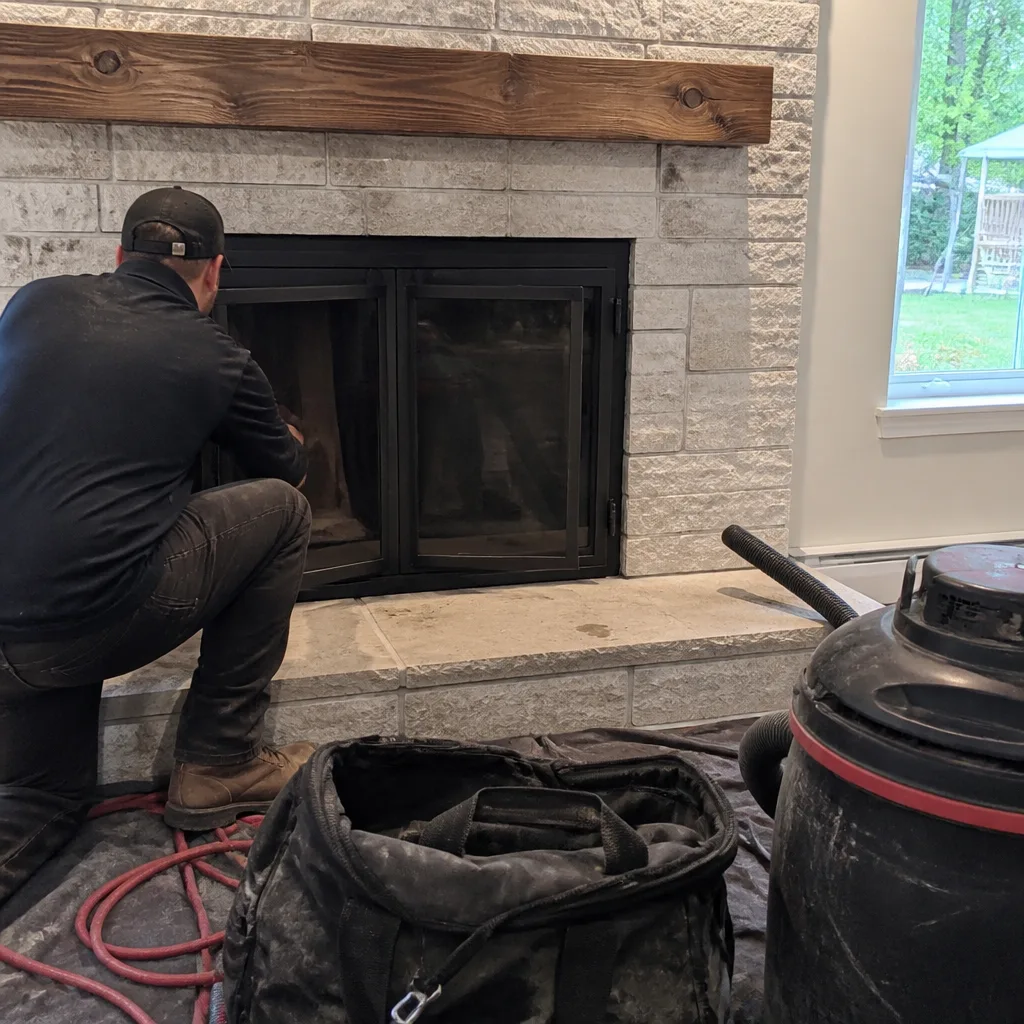
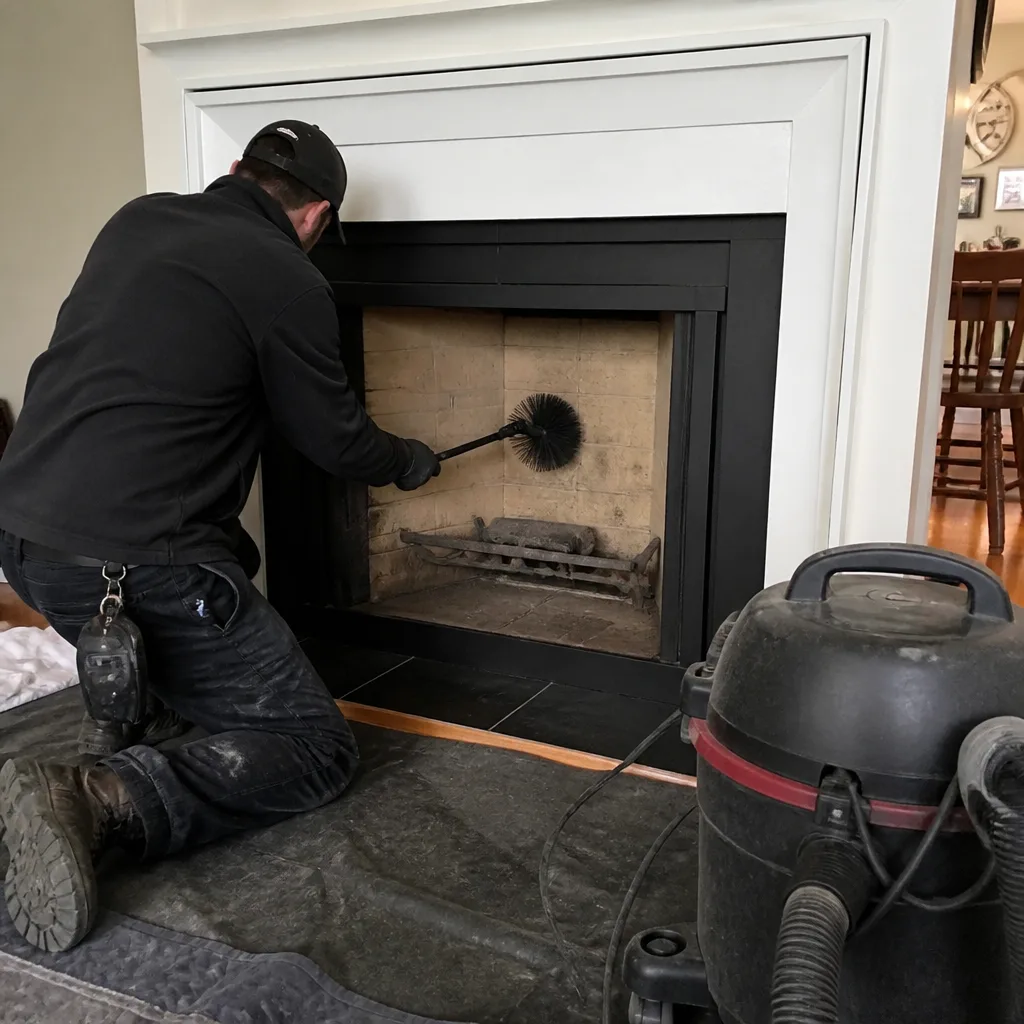
Level 1 sweep and inspection to the NFPA 211 annual standard - flue, crown, cap, and flashing checked and photographed
Chimney sweep logs do not sweep chimneys. They loosen some creosote - which then falls where a brush and vacuum still have to collect it.
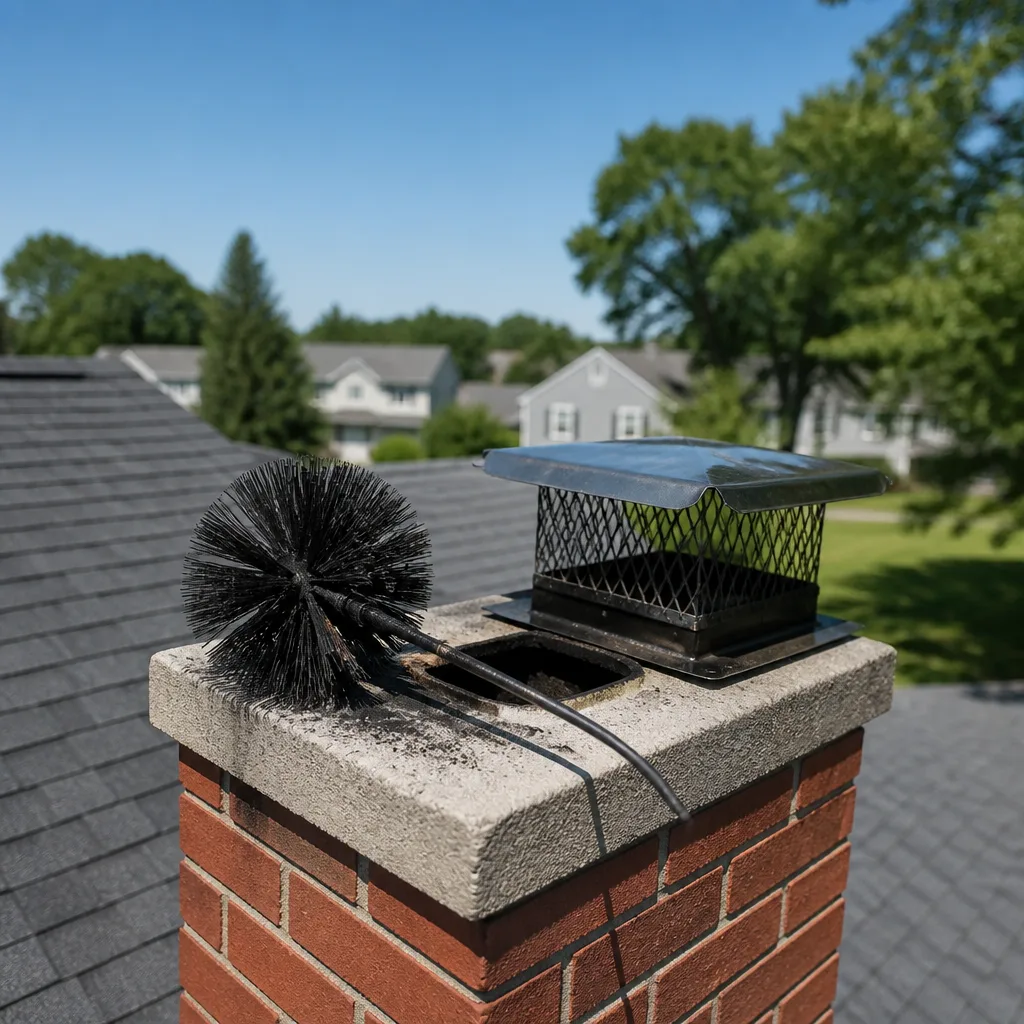
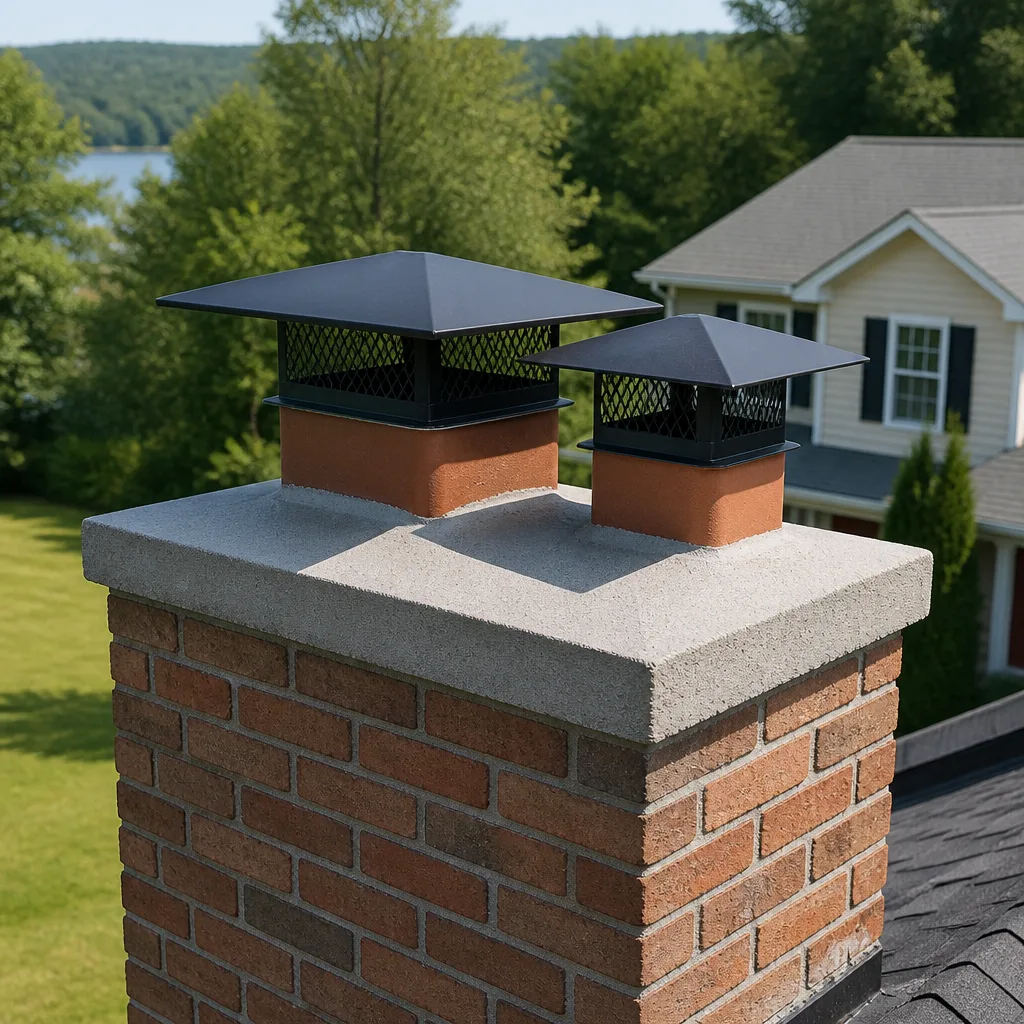
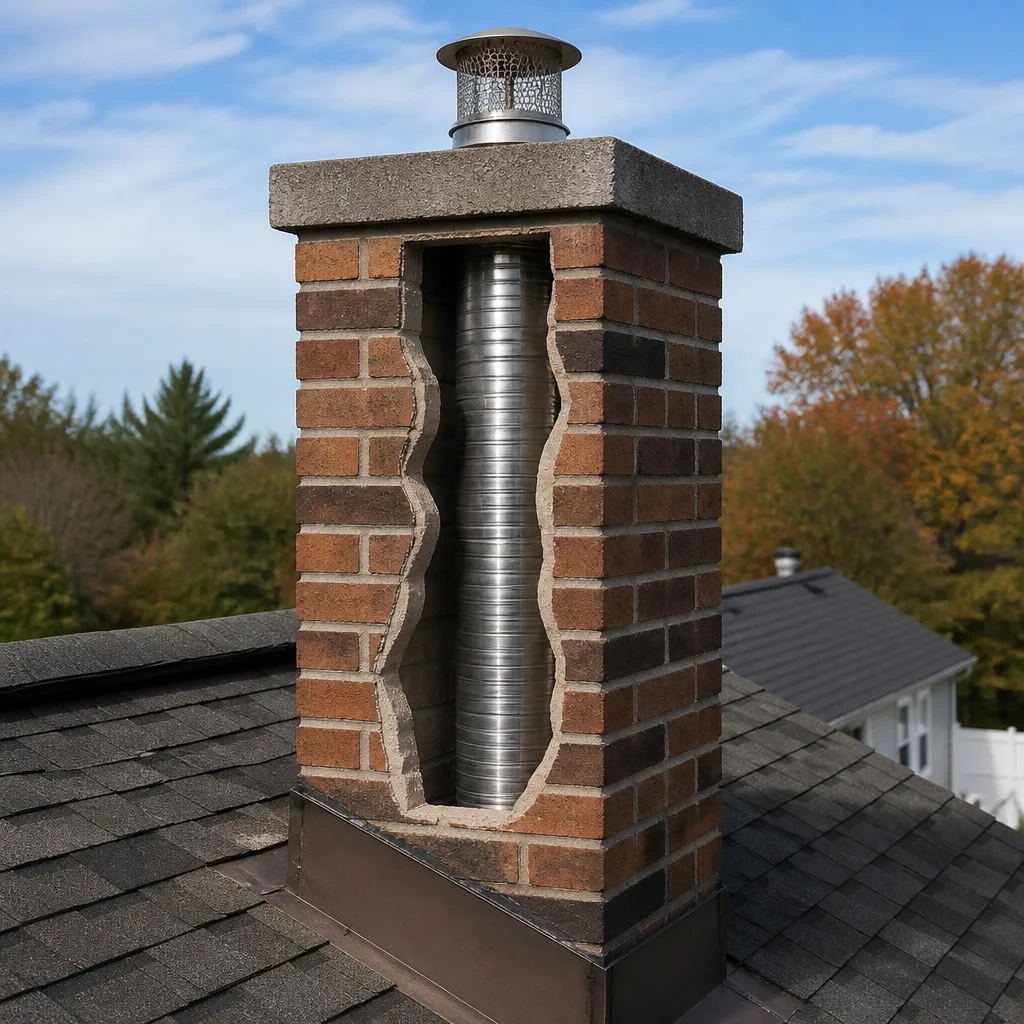
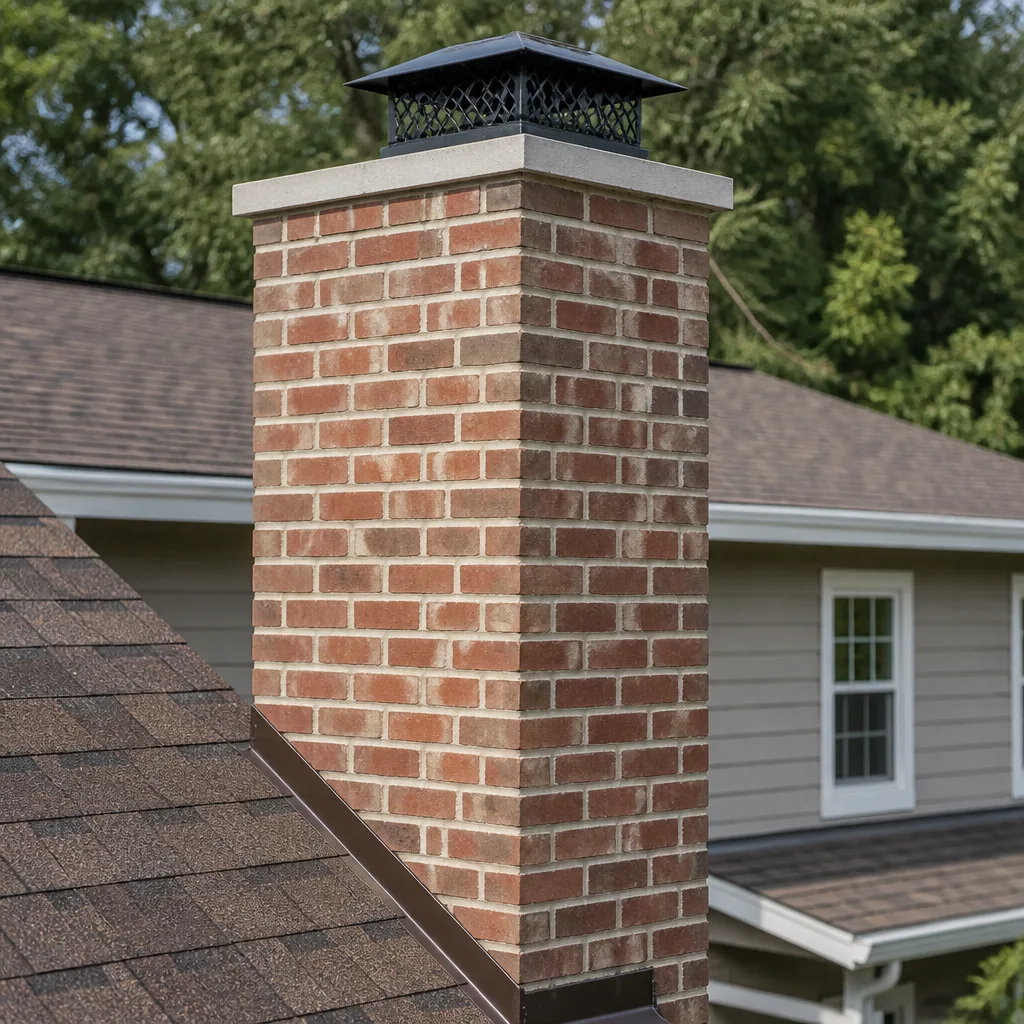
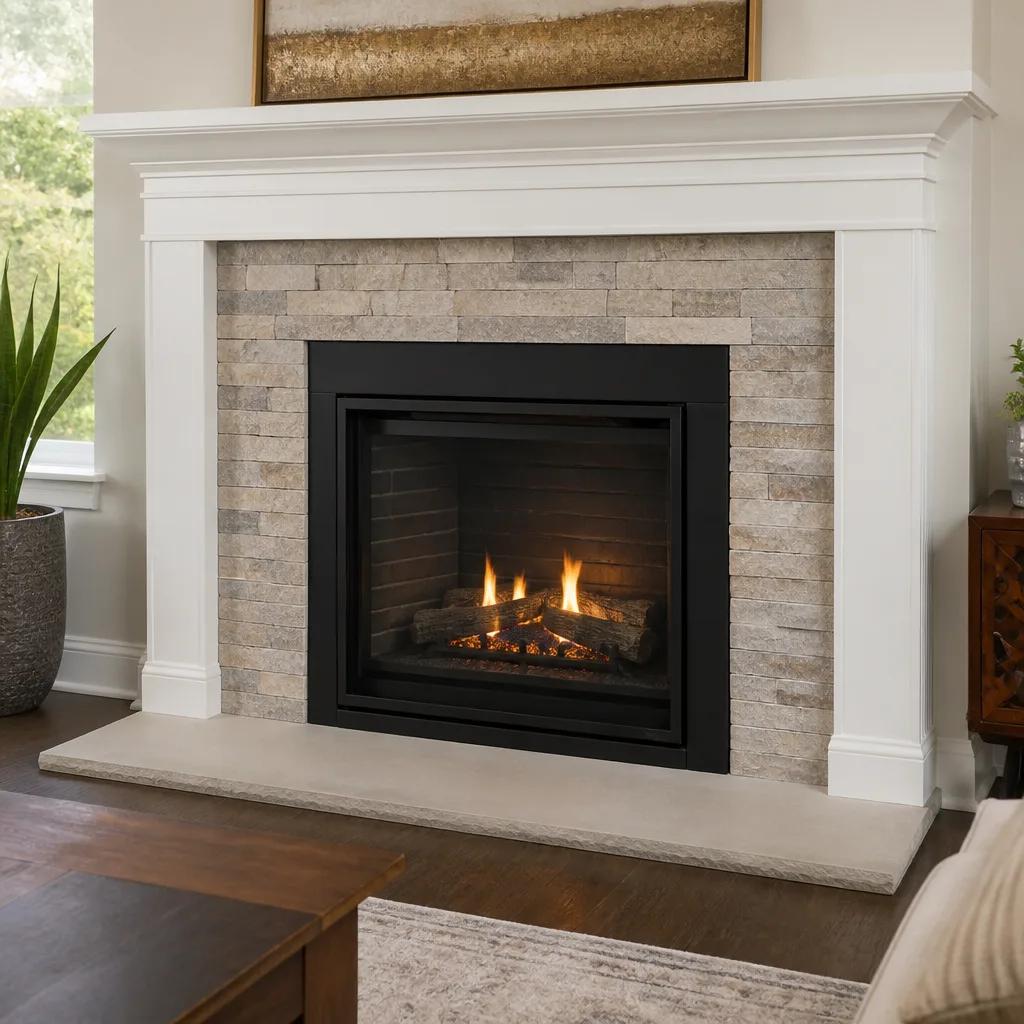
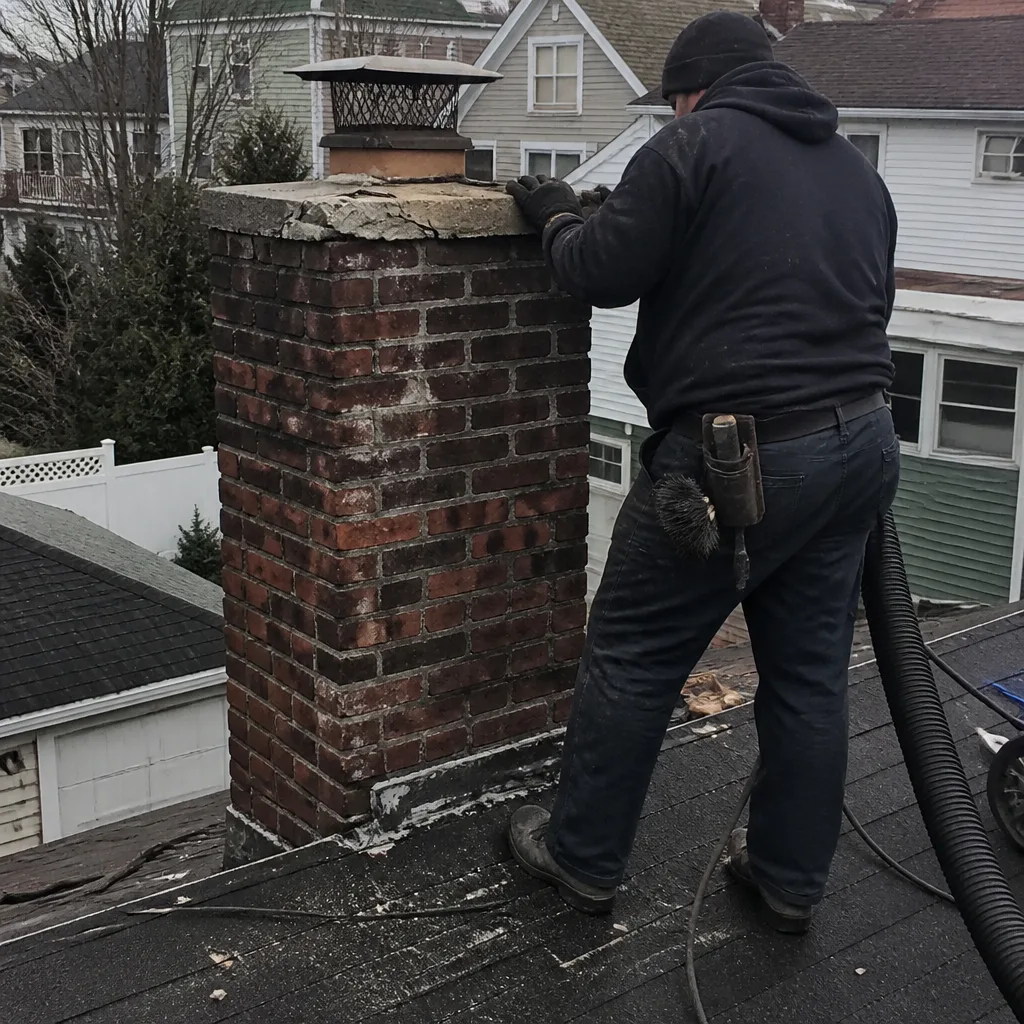 Before
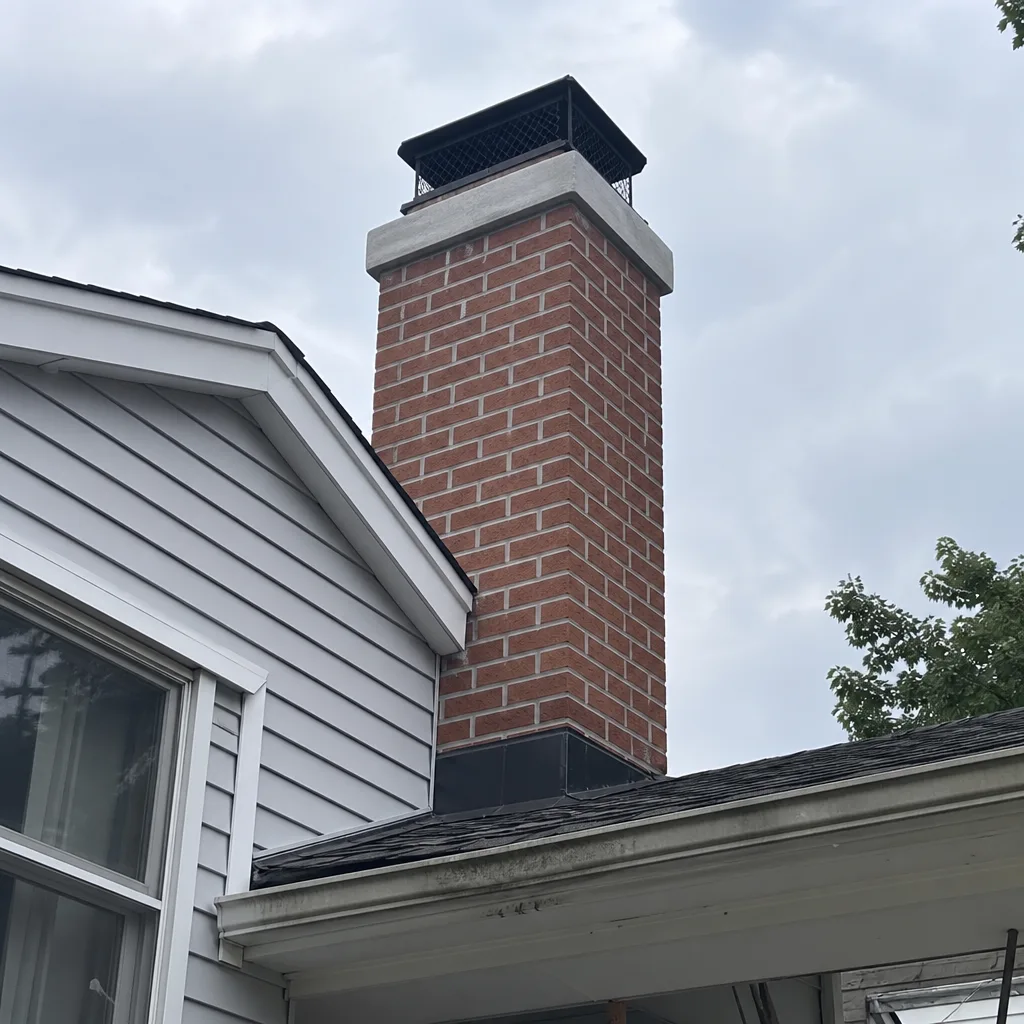 After
After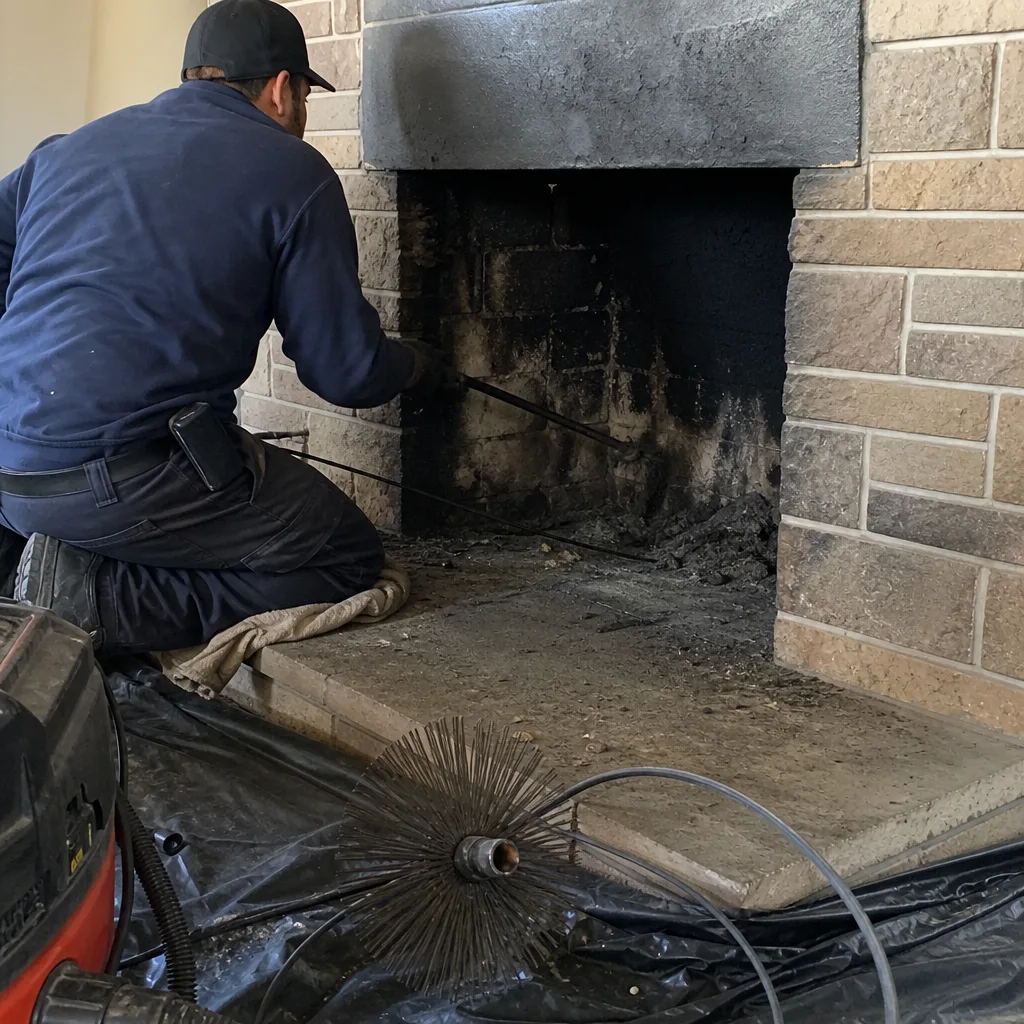 Before
 After
After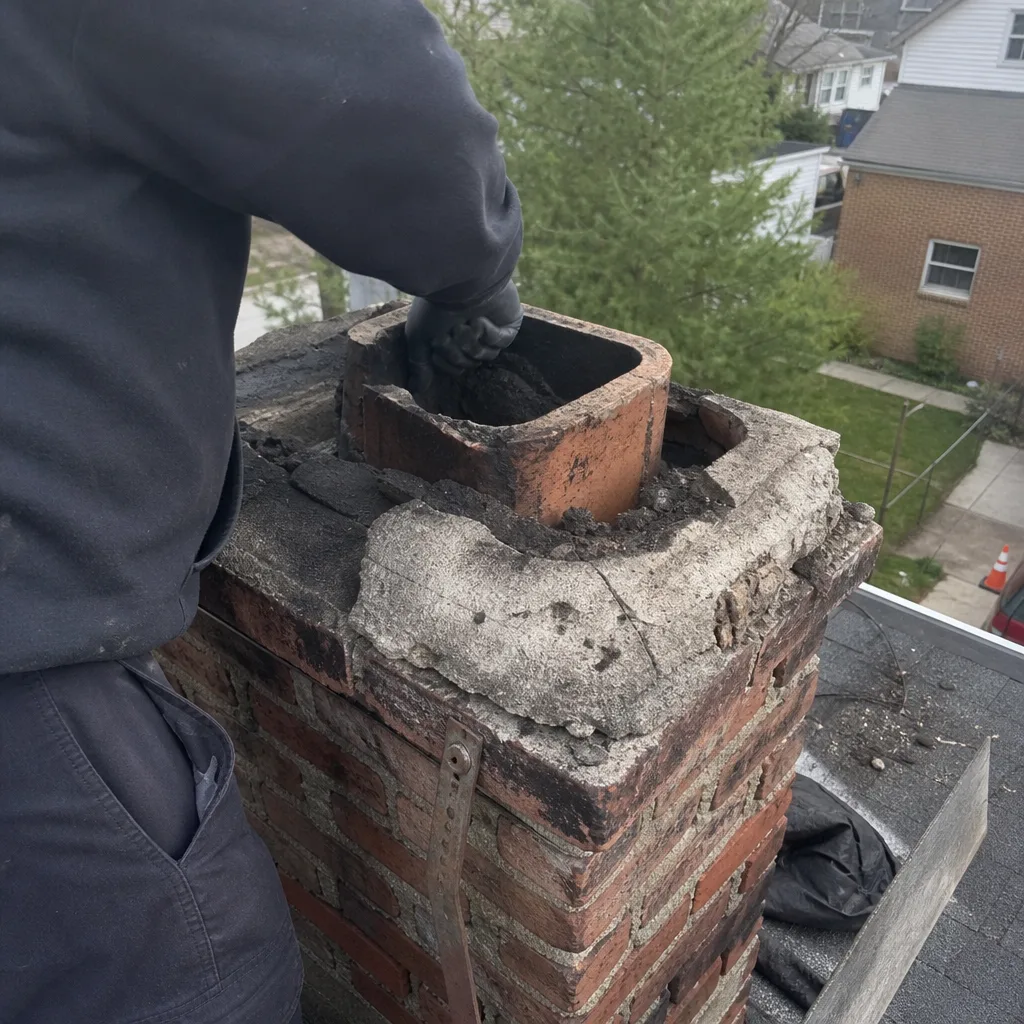 Before
 After
AfterChimney Cleaning Permits, Codes & Inspections in NJ: What You Need to Know
Here’s a fact that catches most Elizabeth homeowners off guard: the chimney sweep itself never needs a permit, but the problems that sweep reveals almost always do. In our 42 years of working in Union County, we’ve seen routine cleanings uncover cracked flue liners, deteriorated crowns, and blocked ventilation that require full permits under New Jersey’s Uniform Construction Code. Skip that permit, and your homeowner’s insurance has grounds to deny a fire claim even if the unpermitted work had nothing to do with the fire. This guide - alongside our Complete Guide to Chimney Cleaning in Elizabeth - draws the line clearly between exempt maintenance and permit-required repairs so you don’t get caught in that gap.
Quick Answer
Chimney cleaning and sweeping never require a permit in Elizabeth or anywhere in New Jersey. However, liner replacement, crown rebuilds, structural repairs, and any work affecting combustion venting require permits under the NJ Uniform Construction Code. Your contractor should pull these permits before work begins, not after, and should provide you with the permit number for your records.
Table of Contents
- Do Chimney Repairs Require Permits in Elizabeth?
- Which Chimney Services Are Exempt from Permits?
- How Elizabeth Processes Chimney Repair Permits
- NFPA 211 and Why It Matters for Your Inspection
- The Insurance Risk of Unpermitted Chimney Work
- How to Verify Your Contractor’s Permit Process
- What Happens During a Level-2 Chimney Inspection
- Elizabeth-Specific Chimney Issues We See Most
Do Chimney Repairs Require Permits in Elizabeth?
Yes. Under New Jersey’s Uniform Construction Code (UCC), administered locally by Elizabeth’s Construction Office, most chimney repairs beyond routine maintenance require permits. The UCC adopts the International Building Code with New Jersey amendments, and chimney systems fall under mechanical and building code sections that mandate permits for any work affecting structural integrity, fire safety, or combustion venting.
Here’s the breakdown we give every homeowner in Elizabeth after a sweep:
- Permit required: Flue liner replacement or relining; crown rebuild or replacement; chimney cap installation that modifies the flue opening; structural rebuild of brick, block, or stone; damper replacement that affects draft control; any modification to clearances to combustibles
- Permit not required: Standard sweeping and cleaning; creosote removal; minor mortar joint repointing that does not affect structural stability; replacement of a like-for-like chimney cap with no modification to flue dimensions
- Gray area (consult the Construction Office): Extensive repointing on a chimney shoulder; partial rebuild of the top few courses; installation of a top-sealing damper on a factory-built fireplace
The critical distinction is whether the work changes the appliance’s venting characteristics or the chimney’s structural capacity. A Level-2 camera inspection, which we perform with photo documentation, reveals which category your chimney falls into. We’ve had Elizabeth homeowners in the Westminster neighborhood surprised to learn that their “simple” crown crack actually required a full permit because the repair involved removing and replacing the top course of brick.
Elizabeth’s Construction Office operates under the Union County Construction Department for certain inspections, but permit applications are filed locally at City Hall. The office inspects for compliance with the UCC, and they will ask to see manufacturer installation instructions for any listed liner system. We use DuraFlex and Olympia Chimney liner materials precisely because they carry the ICC-ESR listings that Elizabeth inspectors recognize immediately.
Which Chimney Services Are Exempt from Permits?
Understanding what’s exempt saves you from contractors who pad bills with unnecessary permit fees, or worse, from operators who skip required permits by misclassifying repair work as “maintenance.”
These services never require permits in Elizabeth:
- Chimney sweeping and cleaning. The physical removal of soot, creosote, and debris from a flue is maintenance, not construction. No structural alteration occurs.
- Fireplace inspection without repair. A Level-1 or Level-2 inspection that concludes with a written report and photos is purely diagnostic.
- Minor exterior cleaning. Chemical or mechanical removal of efflorescence or staining from brick faces does not modify the structure.
- Glass door cleaning and adjustment. Maintenance of existing fireplace doors, including gasket replacement, stays exempt.
- Fireplace grate replacement. Like-for-like replacement of a fire grate is appliance maintenance, not chimney work.
Where homeowners get tripped up - and where our Chimney Cleaning Warning Signs can help - is in the transition zone. A sweep that reveals heavy creosote glazing may require chemical treatment or rotary cleaning. That’s still exempt. But if that same sweep reveals a clay flue tile with a diagonal crack running from the smoke chamber to the first offset, the repair requires a permit. We’ve seen this exact scenario in Elizabeth’s Elmora section, where 1920s construction with original clay liners is common. The crack itself is the trigger, not the cleaning that found it.
Our practice is to document everything with photos during the inspection, then separate the estimate into line items: exempt maintenance with no permit needed, and permit-required repairs with the permit fee listed separately. No surprises on the bill. The number on the estimate is the number on the invoice.
How Elizabeth Processes Chimney Repair Permits
Elizabeth’s permit process follows the NJ UCC’s standard workflow, but local procedures and timing matter for homeowners planning around burning season.
Here’s the step-by-step:
- Application submission. The contractor submits a construction permit application to Elizabeth’s Division of Construction, located at City Hall on East Jersey Street. The application requires a detailed scope of work, contractor license numbers, and proof of insurance.
- Plan review. For liner replacements and structural rebuilds, the office reviews manufacturer specifications and any engineering calculations. Simple cap replacements may skip this step.
- Permit issuance. Once approved, the permit is posted on-site and a copy provided to the homeowner. This document is what your insurance company will want to see if there’s ever a claim.
- Inspection scheduling. The contractor calls for rough and final inspections. For liner work, there’s typically a mid-point inspection before the liner is fully sealed in place.
- Final approval. The inspector signs off, and the Certificate of Approval is issued. File this with your home records permanently.
Timing in Elizabeth runs roughly as follows: simple permits (cap replacement, minor crown repair) take 3-5 business days for issuance. Liner replacements and structural work require 7-10 business days for plan review, plus inspection scheduling that depends on the county inspector’s availability. We advise Elizabeth homeowners to book sweeps in August or September - see our Chimney Cleaning & Sweep Maintenance Checklist for Elizabeth Homeowners for seasonal timing - so any permit-required repairs can be completed before the first cold snap in October.
The Elizabeth office does not offer same-day permits, and they do not accept incomplete applications. A contractor who says “we’ll pull it after we start” or “permits aren’t really enforced for chimneys” is telling you something important about how they operate. In 42 years, we’ve never seen that approach end well for the homeowner.
NFPA 211 and Why It Matters for Your Inspection
The National Fire Protection Association Standard 211, “Chimneys, Fireplaces, Vents, and Solid Fuel-Burning Appliances,” is the technical backbone of every legitimate chimney inspection in America. New Jersey has adopted NFPA 211 by reference in the UCC. Elizabeth inspectors know it. Your insurance adjuster knows it. The question is whether your sweep knows it.
NFPA 211 specifies critical clearances and construction standards that directly affect permit requirements:
- Clearance to combustibles: Masonry chimneys must maintain 2 inches of clearance to combustible framing. Factory-built chimneys must maintain the manufacturer’s listed clearance, often 1 or 2 inches. Any repair that reduces or must restore this clearance requires permit and inspection.
- Liner sizing: The flue liner must be sized according to the appliance’s BTU output and the NFPA 211 sizing tables. An oversized or undersized liner creates draft problems and carbon monoxide risk. Liner replacement therefore requires engineered sizing and permit verification.
- Connections and offsets: NFPA 211 limits the number and angle of flue offsets. A liner installation that modifies an offset triggers permit requirements.
- Cementitious repairs: Products like HeatShield, which we use for flue resurfacing, must be applied per manufacturer instructions that reference NFPA 211 compliance. Elizabeth inspectors verify this.
A sweep who cites NFPA 211 chapter and verse during your inspection is demonstrating legitimate technical knowledge. One who has never heard of it, or who dismisses standards as “just guidelines,” is a liability. We’ve corrected work in Elizabeth’s Peterstown neighborhood where an unqualified operator installed an unlisted flex liner with no clearance to combustible framing, no permit, and no understanding that NFPA 211 even existed. The homeowner discovered the problem during a home sale inspection, and the remediation cost triple what the original cut-rate job had “saved.”
Our Level-2 inspections include a written report that references applicable NFPA 211 sections. This documentation serves two purposes: it gives you the technical basis for any recommended repair, and it provides the permit application with the code citations that Elizabeth’s plan reviewers expect to see.
The Insurance Risk of Unpermitted Chimney Work
This is where the stakes become concrete. New Jersey homeowner’s insurance policies contain standard language that voids coverage for fire damage when unpermitted work is discovered to have contributed to the loss, or even when unpermitted work is present regardless of causation. The exact policy language varies by carrier, but the pattern is consistent.
Typical policy exclusions read approximately as follows: “We do not cover loss caused by faulty, inadequate, or defective design, materials, or workmanship; or by failure to comply with building codes or ordinances.” Some Elizabeth homeowners we’ve worked with carry policies with broader exclusions: any unpermitted structural or mechanical work voids coverage for the entire dwelling, not just the portion affected.
The scenario that keeps us up at night:
- Homeowner has a cracked flue liner.
- Unlicensed or careless contractor relines it without pulling the required UCC permit.
- Two years later, an unrelated electrical fire starts in the basement.
- Fire department responds, damage is significant.
- Insurance adjuster reviews the file, sees the chimney work, requests permit documentation.
- No permit exists. Adjuster denies the entire claim, citing the policy’s code compliance exclusion.
- Homeowner is now out of pocket for hundreds of thousands in repairs.
This is not theoretical. We’ve been called as expert witnesses in two such cases in Union County over the past decade. Both involved chimney work done without permits. Both resulted in coverage denials that litigation could not reverse because the policy language was unambiguous.
The permit is not bureaucratic box-checking. It is a paper trail that proves your chimney work was inspected and approved by an authority with no financial stake in the outcome. When we pull a permit for an Elizabeth homeowner, we file a copy of the approved permit and final inspection certificate in our records, and we urge the homeowner to do the same. If there’s ever a question, the answer is documented.
How to Verify Your Contractor’s Permit Process
Before you sign any estimate for chimney repair in Elizabeth, ask these questions directly. The answers tell you everything about who you’re hiring.
Question 1: “Will you pull the permit, or do I need to?”
The correct answer: “We pull all required permits as part of our standard process.” If the contractor says you need to pull it, or suggests you “can save money by skipping it,” end the conversation. In New Jersey, the contractor performing the work is responsible for permit compliance. A homeowner can pull their own permit only for work they personally perform. If you’re hiring a professional, they pull the permit.
Question 2: “Can I see a copy of a recent permit you pulled for similar work?”
Legitimate contractors maintain records. We can show permit documentation from Elizabeth jobs going back decades. A contractor who hesitates, who claims permits are “confidential,” or who produces nothing, has something to hide.
Question 3: “What happens if the inspector finds an issue?”
The correct answer includes a clear process: corrections made at contractor expense, reinspection scheduled, no additional charges to the homeowner. Our 90-Day Done Right Promise covers exactly this. If it’s not right, we make it right. In writing, no arguing.
Question 4: “Are you licensed to pull permits in Elizabeth specifically?”
New Jersey contractor registration is statewide, but some municipalities maintain additional requirements. Elizabeth requires contractors to be in good standing with the Division of Consumer Affairs and to carry current liability and workers’ compensation insurance. We maintain both, and we provide certificate of insurance documentation on request.
Question 5: “What brand of liner or repair materials do you use, and are they listed for UCC compliance?”
Unlisted materials will fail inspection. We use DuraFlex stainless steel liners, Olympia Chimney components, HeatShield resurfacing, and Famco and Copperfield accessories specifically because they carry the ICC-ESR and UL listings that Elizabeth and Union County inspectors recognize. A contractor who uses “whatever’s cheapest” or who cannot name their material supplier is cutting corners you’ll pay for later.
The contractor’s reaction to these questions matters as much as the answers. Defensiveness, evasion, or pressure to decide immediately are disqualifying behaviors. A craftsman has nothing to hide and no reason to rush you.
What Happens During a Level-2 Chimney Inspection
NFPA 211 defines three levels of inspection. Level-1 is visual, for unchanged systems under continued use. Level-2 is required at property transfer, after chimney fire or seismic event, or when any change to the system occurs. Level-3 involves demolition and is rare. For permit-related questions in Elizabeth, Level-2 is the standard.
Our Level-2 inspection process:
- Exterior examination. We assess crown condition, brick and mortar integrity, flashing, and clearance to vegetation and combustibles. In Elizabeth’s older neighborhoods like Bayway and Keighry Head, we often find spalling brick from decades of freeze-thaw cycling and salt exposure.
- Interior firebox and smoke chamber. We inspect for cracked refractory panels, damaged throat dampers, and proper smoke chamber construction. Photos are taken of every surface.
- Video scan of the flue. Our camera system provides a 360-degree view of the flue interior, documenting every crack, gap, glaze buildup, and offset. The homeowner sees these images in real time on our monitor.
- Attic and accessible concealed spaces. We verify clearance to combustible framing, a critical NFPA 211 requirement that unpermitted work often violates.
- Written report with plain-English verdict. Within 24 hours, the homeowner receives a report with photos, code references, and a clear statement: maintenance only, permit-required repair, or urgent safety issue. No jargon, no pressure, just the facts.
This inspection is what separates a $150 sweep from a proper diagnostic. We’ve had Elizabeth homeowners call us after a “cheap sweep” missed a deteriorated liner that was venting combustion gases into a wall cavity. The camera doesn’t lie, and the photos give you evidence you can show any contractor for a second opinion. We offer free second opinions on any written estimate, and we encourage homeowners to use that offer if another sweep’s recommendations seem vague or excessive.
Elizabeth-Specific Chimney Issues We See Most
Elizabeth’s housing stock, climate, and coastal proximity create distinct chimney problems that out-of-area contractors often misdiagnose.
Freeze-thaw damage on crowns and shoulders. Elizabeth’s winter temperatures fluctuate above and below freezing repeatedly. Water penetrates crown cracks, freezes, expands, and widens the crack. By March, a hairline crack has become a structural failure. We see this most in the Westminster and North End areas, where 1940s and 1950s construction often has poured concrete crowns with no overhang or drip edge.
Chloride-induced brick deterioration. Proximity to Newark Bay and the Arthur Kill means airborne salt accelerates brick spalling and mortar joint erosion. Homes within a mile of the waterfront need more frequent exterior inspection than inland Union County properties. We’ve repointed chimneys in the Port Richmond-adjacent sections of Elizabeth where the mortar was powdering after just 15 years.
Improperly sized liners in converted heating systems. Many Elizabeth homes converted from oil to gas heating in the 1980s and 1990s without proper chimney adaptation. A gas furnace produces lower flue gas temperatures and more moisture than oil. The original clay flue, sized for oil, is now too large for gas, causing condensation and accelerated liner deterioration. This is a permit-required repair that we document with sizing calculations referencing NFPA 211 tables.
Settled foundations affecting chimney plumb. Elizabeth’s varied soil conditions, from fill near the waterfront to clay inland, cause differential settlement. A chimney that leans even slightly may have compromised flue integrity. Our inspection measures plumb and documents any deviation that warrants structural evaluation.
Blocked flues from wildlife and debris. Mature oak and maple canopies in neighborhoods like Elmora and Kenilworth drop leaves and acorns that accumulate on uncapped flues. Squirrels and starlings nest in chimneys without proper screening. A blocked flue is an immediate carbon monoxide hazard and requires both cleaning and installation of a proper cap, which may trigger permit requirements if the flue opening is modified.
Common Mistakes to Avoid
- Assuming the sweep company handles permits automatically. Many national chains and one-truck operators never pull permits. Ask explicitly before work begins.
- Accepting verbal assurance that a repair is “maintenance, not construction.” The UCC definitions are specific. If the work modifies structure or venting, it’s construction. Get the classification in writing.
- Failing to file permit documents with your home records. The permit and final approval belong with your deed, insurance policies, and major appliance manuals. We’ve seen Elizabeth homeowners unable to produce documentation when selling their homes or filing claims.
- Hiring based on lowest price without verifying permit inclusion. A low estimate that excludes permit fees, inspection costs, and proper materials is not cheaper. It’s incomplete. The final cost, plus remediation of failed work, always exceeds the honest upfront price.
- Ignoring inspector requests for access. Elizabeth inspectors need interior access to verify liner installation and clearance. Refusing access delays final approval and can void the permit. Schedule accordingly.
- Using unlisted or salvage materials to “save money.” We encountered an Elizabeth homeowner whose previous contractor had installed a used oil furnace flue liner in a gas application. It failed inspection, created a carbon monoxide risk, and had to be completely removed. The “savings” cost an additional $3,400.
- Neglecting to verify contractor insurance before permit work begins. Elizabeth requires current certificates. An uninsured worker injured on your property becomes your liability. We provide proof of insurance on every job without being asked.
When to Call a Professional
Call a certified chimney professional when your sweep reveals any of the following: visible cracks in clay flue tiles, white efflorescence or spalling brick on the exterior, water staining on ceilings near the chimney, a smoking fireplace that previously drafted properly, or any recommendation for liner work, crown repair, or structural rebuilding. These conditions indicate permit-required repairs that demand documented expertise.
At Hearthstone Chimney Co., we’ve served Elizabeth and Union County for over 42 years. Our Level-2 camera inspections end with photos you can see and a plain-English verdict. We pull all required permits, use only listed professional-grade materials, and back every job with our 90-Day Done Right Promise in writing. Chimney cleaning and inspection in Elizabeth is where we start, but we’re prepared to see the full project through with proper documentation at every step.
Call (908) 923-3159 for a free estimate. A live person answers 24 hours a day, 7 days a week. We’ll be there when we say.
Frequently Asked Questions
A standard chimney sweep in Elizabeth typically runs $200-$350 and never includes permit fees because sweeping itself requires no permit. Permit fees apply only to repair work discovered during the sweep, and we list those separately on our estimate so you see exactly what maintenance costs versus what construction requires. For more guides & resources, explore our blog, or call (908) 923-3159 for an exact quote - estimates are free.
You need a new liner if your current liner is cracked, improperly sized for your appliance, or missing entirely, because these conditions create fire and carbon monoxide hazards that cleaning cannot fix. However, we never recommend liner replacement without camera evidence you can see for yourself, and we’ll tell you plainly when a condition can be monitored rather than immediately repaired. Call (908) 923-3159 for an exact quote - estimates are free.
The National Fire Protection Association recommends annual inspection, with sweeping as needed based on creosote accumulation. In Elizabeth, where many homeowners burn seasoned hardwood and use their fireplaces as supplemental heat, we find annual sweeping sufficient for most. Homes with oil or gas heating systems venting into the same chimney may need more frequent inspection due to condensation issues. Call (908) 923-3159 to schedule - estimates are free.
Skipped maintenance leads to creosote buildup that can ignite into a chimney fire, cracked liners that vent carbon monoxide into living spaces, and water damage that compromises structural integrity. In Elizabeth’s climate, minor crown cracks become major rebuilds within two to three winters of neglect. The cost of prevention is always lower than the cost of remediation. Call (908) 923-3159 for an exact quote - estimates are free.
A homeowner can pull a permit only for work they personally perform. If you hire a contractor, New Jersey law and Elizabeth ordinance require that contractor to pull the permit. A contractor who asks you to pull the permit is likely unlicensed, uninsured, or attempting to evade responsibility for code-compliant work. This is a red flag that should end the engagement.
Simple permits for cap replacement or minor crown repair typically issue in 3-5 business days. Liner replacements and structural rebuilds require 7-10 business days for plan review, plus inspection scheduling. We advise Elizabeth homeowners to schedule sweeps by early September so permit-required repairs can be completed before consistent heating season begins. Rush permits are not available, and incomplete applications are rejected.
The Bottom Line
Chimney cleaning in Elizabeth requires no permit and should be performed annually. The repairs that cleaning uncovers - liner replacement, crown rebuilds, structural work - almost always do require permits under New Jersey’s Uniform Construction Code. The contractor you hire should pull these permits as standard practice, provide documentation for your records, and use listed materials that pass inspection. Skipping permits saves nothing and risks everything when your insurance company investigates a claim. Done right, with proper documentation, chimney work protects your home, your coverage, and your peace of mind for decades. That’s the standard we’ve held for 42 years, and it’s the standard we’ll hold for the next 42.
Written by Russell Haines, Owner at Hearthstone Chimney Co., serving Elizabeth since 2014.